Ci sono volte in cui sì, lo ammetto, mi preoccupo da sola di me stessa.
Prendete stasera, ad esempio: facendo zapping, mi sono accorta che su France 2 davano De Rouille et d'Os di Jacques Audiard (già Zazie d'Or 2012).
La mia prima reazione è stata quella di avvertire tutti gli amici francesi su Facebook che c'era il film.
E fin qui, tutto bene.
Solo che poi ho mollato tutto quello che stavo facendo per rivedere il film.
Ora, io De Rouille et d'Os l'ho visto due volte al cinema e un'altra volta sulla mia TV quando mi sono comprata il Blue Ray (il giorno in cui è stato messo in vendita, per altro).
Quindi, dico io, che senso aveva mettermi lì a rivederlo? Nessuno, immagino.
E' al di là di qualsiasi logica quello che ho fatto, però - tant'è - l'ho fatto.
E sono lì che mi stupisco ogni volta della bellezza delle immagini, del meraviglioso modo che ha Audiard di intingere le scene più crude nella luce più calda, di filmare una scena di sesso con quel misto di brutalità e di dolcezza che fa spesso parte della vita ma raramente dei film, di far pronunciare ad un uomo che a stento riesce a mettere insieme due frasi un ti amo che illumina il buio nel quale quel sussurro è filmato.
Insomma che volete che vi dica, non c'è alcun senso ma io mi metto lì a rivederlo.
E, di colpo, ha più senso tutto il resto, per me.
Lo so, it's a sickness.
E' una malattia.
E il peggio è che non ho nessuna intenzione di guarire.
lunedì 1 dicembre 2014
domenica 30 novembre 2014
Nightcrawler
Quante volte l'abbiamo vista, sullo schermo? Ore e ore di macchine che sfrecciano su strade lunghe e tutte uguali, dove sembrano accadere le cose più bizzarre: penso istintivamente a Into the Night di John Landis (1985) e al più recente Drive di Nicolas Winding Refn (2011).
La distesa immensa delle luci di LA fa talmente parte del nostro immaginario collettivo che quando un giorno (o meglio, una notte), ti capita di vederla sul serio dall'aereo, ti sembra di essere davanti allo schermo di un cinema, e che tutto quello lì sotto non sia reale ma una semplice proiezione della tua mente.
LA, nella mia esperienza, è in effetti la città più irreale in cui mettere piede. E' la città in cui, se entri all'ufficio informazioni per chiedere un'indicazione, te la daranno dando per scontato che tu sia in macchina e, quando scoprono che non è così, ti guarderanno come se fossi appena atterrata da Marte.
LA è la città in cui tutti i sogni, così come tutti gli incubi, possono diventare realtà.
Nightcrawler di Dan Gilroy è una storia che ha decisamente più a che fare con i secondi.
![]() |
| Louis (Jake Gyllenhaal) e Nina (René Russo) |
Nightcrawler si iscrive in una lunga tradizione di film americani sulla cattiva influenza e il cinismo dei mass media, basti pensare a due classici: Ace in the Hole di Billy Wilder (1951) e Network di Sydney Lumet (1976). La figura di Louis Bloom è assolutamente geniale: trentenne che, per sua stessa ammissione, passa la sua vita su internet, è il prodotto perfetto della società attuale. Parla come se fosse uscito da un corso di marketing per corrispondenza, è lucido ed efficace sui suoi obiettivi e da manuale nel gestire il suo più volte citato "business plan". E' anche un mostro, ma questo Bloom sembra ignorarlo. E' talmente obnubilato dal raggiungimento dei suoi obiettivi, che si è dimenticato di essere umano.
Non solo non ha mai un dubbio sui suoi atti e sulla sua vita (anche se vita è una parola grossa, nel suo caso), ma si stupisce moltissimo che gli altri non si comportino come lui. Bloom è al di là del cinismo, è semplicemente agghiacciante, è in una no man's land di cui è davvero pauroso scoprire l'esistenza.
![]() |
| Lucida follia: Jake Gyllenhaal nel ruolo di Louis Bloom |
Nella parte di Louis Bloom, in quella che ad istinto citerei come l'interpretazione dell'anno, c'è un attore che se continua così ne vedremo delle belle: Jake Gyllenhaal. Quasi trasfigurato: la faccia scavata, gli occhi famelici, il corpo ossuto, sembra essere abitato dalla follia del suo personaggio. E' perfetto dall'inizio alla fine, senza sbavature, senza un sospetto di gigioneggiamento. La sua è un'interpretazione scarna ed ossessiva che lascia impauriti ed ammirati.
Accanto a lui, nella parte del suo assistente (una figura davvero notevolissima), un ottimo attore inglese che di nome fa Riz Ahmed, e un'altrettanto brava (e invecchiata normalmente, ah, ma allora esiste, a Hollywood!) René Russo nel ruolo della cinica responsabile del canale Tv a cui Bloom vende i suoi pezzi.
![]() |
| Louis (Jake Gyllenhaal) e Rick (Riz Ahmed) |
martedì 25 novembre 2014
'71
Have you ever been passionate about a subject that doesn’t have anything to do with your life?
I confess I was, many times.
Most probably, though, the worst case of all is my huge interest for the Irish Troubles.
Don’t ask me why, but since a very young age I started reading anything about the long and tiresome internal war between catholic and protestant in Northern Ireland. I believe I read every novel and seen every movie on this subject. I also have my own ideas about the best novel written about it (Eureka Street by Robert McLiam Wilson) and the best movie made about it (Hunger by Steve McQueen).
A couple of weeks ago, I found out there was a new movie about the Troubles and, of course, I immediately went to see it. I didn’t expect much and so, as it is often the case when expectations are low (isn’t the same in real life?), I liked it very, very much.
I am talking about the movie ’71 by Yann Demange.
The movie is about a 24 years old British soldier, Gary Hook, who is sent to Belfast in 1971, together with a bunch of very young comrades, to keep under control the explosive situation between catholic and protestant. Clearly enough, nobody knows, even his superiors, how to deal with this strange war. During his first mission in the earth of the catholic enclave, something goes wrong and Gary and another guy are left in the hands of the “enemies”. The other guy is shot to death, but Gary manages to escape. Alone, scared, injured, the guy can count only on himself and on his lucky star to get out of that awful and nightmarish situation. Will he be able to survive?
Compared to many movies about the Troubles, this is a very original one. First of all, this is not about a catholic guy but about a British soldier (very rare!) and, secondly, it is a real thriller (unique!). Forget about all the movies trying to explain why this war started, or movies about the real story of some catholic “martyr”. This is a pursuit movie, where the guy is chased from the beginning until the end and you, as spectator, jump on your seat every two seconds because you’re too scared or too agitated to watch another scene.
Catholic and protestant are put on the same level, here. The movie is quite smart in elucidating complex situations with simple shortcuts: yes, it is a bad war, yes, there are bastards on both sides, yes, instead of solving it, there were people willing to make it worse, and yes, too many families have been uselessly devastated. I have to say that this approach was very refreshing and at the same time even more powerful in dragging you in this unbelievable hell.
Yann Demange, the film-maker behind this little gem, is – weirdly enough - a French chap, but he has a very British upbringing (he directed, among other things, the first season of the TV series Criminal Justice with Ben Whishaw). His mise-en-scène is beautiful, and the rhythm of the movie impeccable. The credit for such a great result surely goes also to the actor who plays Gary: British Jack O’Connell, already appreciated in Starred Up by David MacKenzie and now about to enter stardom as the main character of new Angelina Jolie’s movie, Unbroken. O'Connell carries the entire movie on his shoulders in a very convincing way. His desperate face mixed with his stubborn willing to survive win the audience’s attention and create an immediate and total identification. You suffer for him and with him from the beginning till the end, and you want him to be saved, at every cost!
In the distance, Belfast and his fires shine of a new light.
All of a sudden, I have a new film in my top five of best movies about the Irish Troubles!
I confess I was, many times.
Most probably, though, the worst case of all is my huge interest for the Irish Troubles.
Don’t ask me why, but since a very young age I started reading anything about the long and tiresome internal war between catholic and protestant in Northern Ireland. I believe I read every novel and seen every movie on this subject. I also have my own ideas about the best novel written about it (Eureka Street by Robert McLiam Wilson) and the best movie made about it (Hunger by Steve McQueen).
I am talking about the movie ’71 by Yann Demange.
The movie is about a 24 years old British soldier, Gary Hook, who is sent to Belfast in 1971, together with a bunch of very young comrades, to keep under control the explosive situation between catholic and protestant. Clearly enough, nobody knows, even his superiors, how to deal with this strange war. During his first mission in the earth of the catholic enclave, something goes wrong and Gary and another guy are left in the hands of the “enemies”. The other guy is shot to death, but Gary manages to escape. Alone, scared, injured, the guy can count only on himself and on his lucky star to get out of that awful and nightmarish situation. Will he be able to survive?
Catholic and protestant are put on the same level, here. The movie is quite smart in elucidating complex situations with simple shortcuts: yes, it is a bad war, yes, there are bastards on both sides, yes, instead of solving it, there were people willing to make it worse, and yes, too many families have been uselessly devastated. I have to say that this approach was very refreshing and at the same time even more powerful in dragging you in this unbelievable hell.
In the distance, Belfast and his fires shine of a new light.
All of a sudden, I have a new film in my top five of best movies about the Irish Troubles!
domenica 23 novembre 2014
Ciné-balade Truffaut
I read many times about these Ciné-Balades, Cinema Walks around Paris, but until last week I never had the chance to follow one. Of course, when I heard that the new ciné-balade was about François Truffaut (in the 9th and 18th arrondissement, where I live!), I immediately decided to participate.
So there I was, last Saturday, with a bunch of unknown but very nice people.
The meeting point with Juliette, our guide, was in a very truffautian endroit, the church of the Trinité, in Place de la Trinité:
In the fountain in front of the church, after a night spent outside, Antoine Doinel in Les 400 Coups famously washes his face:
The second stop-over was an unexpected one: the Hotel Langlois, at 63 Rue Saint Lazare.
The third place we visited was Place Saint Georges: Truffaut used the Theatre Saint Georges as location for the theatre where the jewish director Lucas Steiner hides himself during the Paris occupation in Le dernier Métro (1980):
The next stop-over was always related to Henri Langlois: when his family moved from Turkey to Paris, he lived in Rue Laferrière, above the Place Saint Georges, and it was in his apartment (quite famously in its bath tub) that he was piling up all the film reels he could find before the creation of the Cinémathèque:
Truffaut spent his (sad) childhood just a couple of streets above this one, at the 33 of Rue de Navarin:
Antoine Doinel, his alter ego in Les 400 Coups, lives very close by, at n° 4 of Place Gustave Toudouze:
The school of Antoine Doinel and François Truffaut was not far away, the Lycée Jacques Decour, in Avenue Trudaine:
Avenue Trudaine is also the street where, in Baisers Volés (1968), Doinel as private detective follows a woman and the woman immediately understands somebody is following her!
In Les 400 Coups, Antoine Doinel very often finds a shelter for the night at his best friend's place. I didn't know that the interiors of René's parents house were filmed in a big apartment at n° 10 of Rue de Douai!
The exteriors, though, were filmed in the private street Avenue Frochot, which was an homage to Truffaut's favorite French film-maker, Jean Renoir, who lived many years in this gorgeous street:
Always in Rue de Douai, but this time at n° 41, there was the apartment of Jacques Doniol-Valcroze, who was the founder of the Cahiers du Cinéma together with André Bazin. In this apartment Truffaut filmed, in 1955, his first short-movie, Une Visite. Truffaut was so unhappy about it, that notoriously destroyed every copy of his first serious attempt to cinema. Probably the most interesting thing to say about this short movie is that the cinematographer was a certain Jacques Rivette, while the editor was a certain Alain Resnais...
In the near Rue Mansart, there is the restaurant owned by Jeanne Moreau's father, La Cloche D'Or. The place is still open and still looks quite charming:
Paris is a city full of great and beautiful cinemas, but I think that at the time of Truffaut's childhood, there were really incredible salles de cinéma! The greatest one was the famous Gaumont Palace, considered the "biggest cinema in the world": its theater could contain 6000 people. Built in 1899, completely renovated in 1931, the cinema was sadly closed in 1973. Now at the same address of Rue Caulaincourt, you can find an awful Castorama and a miserable Hôtel Mercure... Modern time suck!
The walk took end in front of the Montmartre Cemetery, where Truffaut is buried.
It was time for Juliette to show us the last piece of movie with her i-pad and super cute sound system:
Before leaving, one of the participants, a curator at the Montmartre Cemetery, told us the most incredible story: one day, in his office, Jean-Pierre Léaud showed up asking if it would have been possible to have the grave near the one of Truffaut for himself. When he was told that wasn't feasible, Léaud insisted again and again and left his phone number, praying them to call him if things would have changed. The curator and his colleagues found out, a bit later, that the grave was actually available. They called Léaud's number but in vane: they never had an answer.
Long live Antoine Doinel!
I wish to thank Juliette of Ciné-Balade for being such a lovely guide.
Dear readers, if you happen to be in Paris in the next weeks, the Ciné-Balade Truffaut is still going on. Don't miss it!
domenica 16 novembre 2014
The Fundamentals
Maybe it is because I just got back from New York, but I think Woody is absolutely right.
As long as we have those things, well.. we're fine!
martedì 21 ottobre 2014
Come se fosse ieri
Non c'ero, ma l'ho letto tante volte. Era una giornata grigia e triste, la più triste di tutte, in effetti, perché era il giorno della morte di François Truffaut.
Trent'anni sono un tempo lunghissimo, per qualcuno che se n'è andato.
Eppure sembra essere ieri, nel caso di Truffaut.
I suoi film, la sua poetica, le sue passioni, tutto è ancora così presente, la sua influenza è tale, ancora oggi, sul cinema, che sembra quasi non se ne sia mai andato.
Ogni anno, in questo giorno, cerco di andarlo a trovare al cimitero di Montmarte (10 minuti a piedi da casa mia, no, per dire, a volte, i posti in cui ci si ritrova a vivere).
Oggi, più di ogni altro anno, volevo andarci.
Ma i casi della vita hanno voluto che fossi in viaggio e che tornassi a casa solo a metà pomeriggio.
Alle quattro, ho telefonato al cimitero, perché non ricordavo a che ora chiudesse.
Mi ha risposto un signore dalla voce gentile, in sottofondo si sentiva una campanella che squillava senza sosta: "Il cimitero di solito chiude alle 18, ma oggi purtroppo stiamo già chiudendo". Io, incredula: "Come sarebbe state già chiudendo? Per quale motivo?".
"C'è un allarme tempesta, e il comune ci fa chiudere prima..."
"No, ma non è possibile. E non riaprite più?"
Silenzio perplesso, dall'altra parte della cornetta.
"No, signorina, non riapriamo più".
Mi sono immaginata la tomba nera di Truffaut sotto la pioggia, la scritta 1932-1984 lucidata dalle gocce, gli alberi ondeggianti al vento riflessi nel marmo scuro. E nessuno intorno.
Ho avuto un momento di panico, di tristezza infinita.
Mi sarei quasi precipitata fuori nella speranza di riuscire a trovare ancora il cancello aperto.
Ma poi ho alzato gli occhi e ho visto la faccia di Truffaut sul poster della sua mostra alla Cinémathèque (l'ho appeso alla porta di casa), quella in cui ride tenendo le dita sulle orecchie.
Non ho potuto fare a meno di ridere anch'io.
Ma guarda in che stato sono per colpa tua, François! Ma si può?
La risposta è sì, si può.
Perché mi manca.
Mi mancherà sempre.
Effetto Notte by Zazie from Zazie from Paris on Vimeo.
Questo video l'avevo preparato per il 25° anniversario della morte di Truffaut, ma ho pensato di riproporlo perché ci sono molto affezionata: è un mio personale omaggio alla scena in cui il regista Ferrand ne La Nuit Américaine tira fuori da una scatola dei libri sul cinema, che poi erano quelli amati da Truffaut nella vita, con in sottofondo la musica di Georges Delerue.
Un effetto notte versione Zazie, insomma. Spero vi piaccia, cari lettori!
lunedì 20 ottobre 2014
L'Expo Truffaut
E' il posto dove vengono segnalati tutti i nomi che cito, e quante volte li ho citati dalla creazione del blog ad oggi. Maggiore è il numero di citazioni, più grande è il nome.
Provate ad indovinare chi stravince? Chi è l'uomo il cui nome sta scritto a lettere cubitali in questo blog (e nel mio cuore)?
Vi aiuto: francese, regista, precursore, appassionato, indimenticabile.
In una parola, François Truffaut.
Non c'è quindi bisogno di spiegarvi la mia felicità quando ho letto che la Cinémathèque Française stava preparando una mostra a lui interamente dedicata in occasione del 30° anniversario della sua (ahimè precocissima) morte, avvenuta il 21 Ottobre 1984.
L'evento più importante del 2014 ha preso il via l'8 Ottobre e terminerà il 25 Gennaio 2015, per cui, se state pensando di farvi un giretto a Parigi, mi sembra il caso che compriate i biglietti al più presto.
Cronologica e allo stesso tempo tematica, la mostra ha potuto contare su centinaia di documenti (alcuni inediti) provenienti dal Fondo Truffaut che Madeleine Morgenstein (ex-moglie del regista) e le figlie Laura, Eva e Josephine (quest'ultima avuta dall'attrice Fanny Ardant) hanno deciso di affidare alla Cinémathèque stessa.
Il risultato è una mostra ricca, interessante ed originale che potrà soddisfare tutti i gusti: quelli dei fans più sfegatati e quelli di quanti vogliono farsi un'idea più precisa del cinema e del personaggio Truffaut.
Figlio non voluto né amato, Truffaut ha avuto un'infanzia difficile e tormentata, nella quale ha però la fortuna di scoprire le sue due grandi passioni: la letteratura (per disturbare il meno possibile la madre leggeva per ore libri stando immobile) e il cinema (invece di andare a scuola, scappava nelle sale buie insieme al suo amico Lachenay). La prima parte della mostra è piena di lettere tra i due amici, foto della sua infanzia, libretti in cui segnava i film che andava a vedere (quando ho letto di una sua visione al Ciné Studio 28, il cinema di fianco casa mia, ho avuto un attimo di commozione pura). Alcuni documenti sono tenerissimi, come la nota scritta dalla maestra ai genitori di Lachenay, in cui si lamentano del fatto che il bambino non è andato a scuola aggiungendo a mano una piccola postilla: Credo che l'alunno sia in giro con il suo compagno Truffaut...:
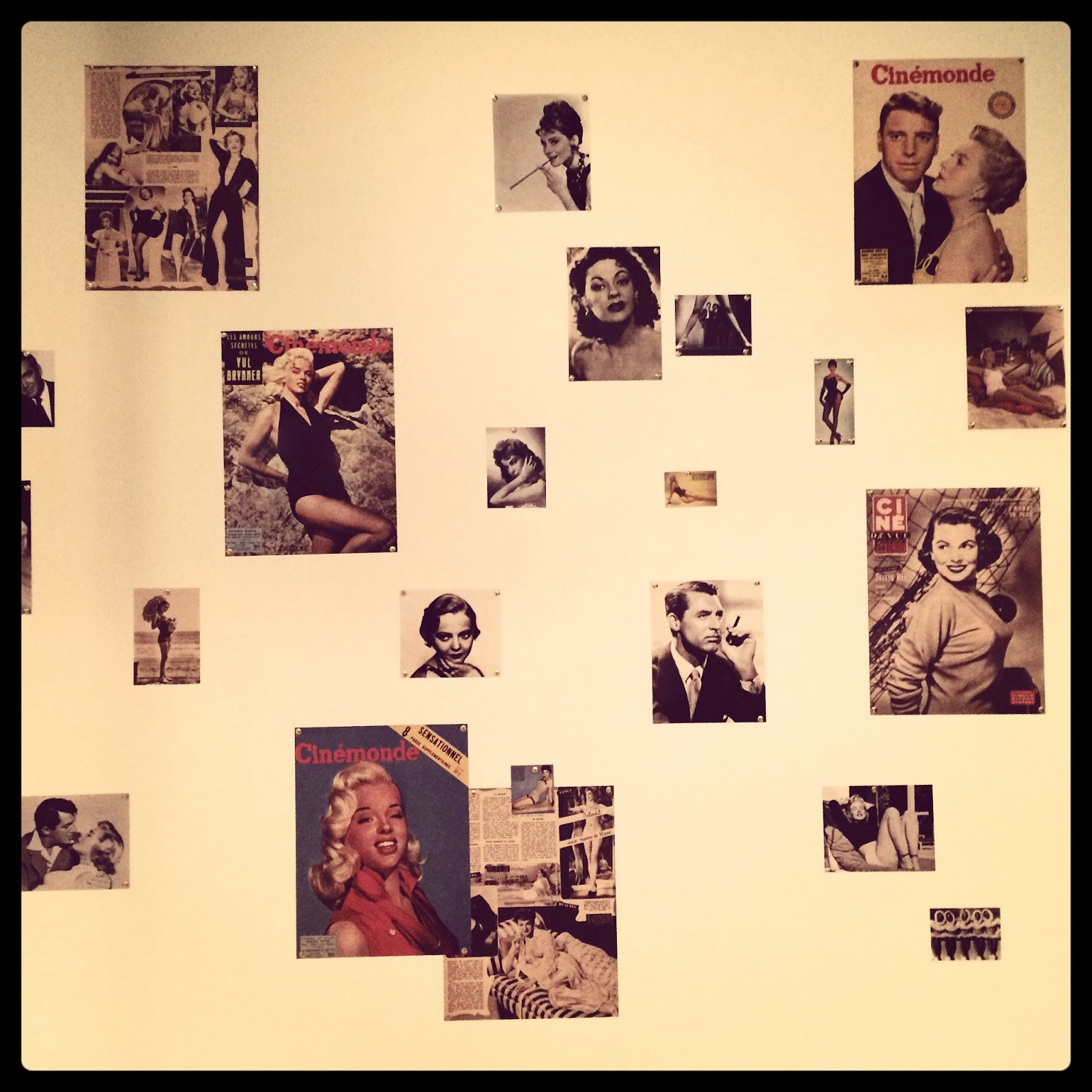
Salvato dal carcere militare (aveva firmato per andare in Indocina) da quello che sarà per lui un vero padre, il critico cinematografico André Bazin, Truffaut inizia a recensire film su alcune riviste, per poi approdare ai Cahiers du Cinéma, quella che ancora oggi viene considerata la più influente pubblicazione cinematografica mondiale. E' lì che Truffaut incontra quelli che diventeranno i registi della Nouvelle Vague: una banda di mezzi matti che passano le loro giornate al cinema, per poi scriverne, e infine passare dietro la macchina da presa. Nella mostra è stata ricostruita "l'ambience cahiers": le pareti piene di dive del cinema, il magnetofono con cui registravano le interviste ai loro registi preferiti, la macchina da scrivere che usavano per stroncare o incensare i film, le famose copertine gialle:
![]() |
| Claude Chabrol e Jean-Luc Godard nella sede storica dei Cahiers |
In questa mostra sono tanti gli oggetti che mi hanno fatto una grande tenerezza: lo stereo, la radio e la sveglia di Antoine Doinel in Antoine et Colette, il tubo della posta pneumatica di Baisers Volés, le sigarette della Sirène du Mississippi, il vestito della Deneuve in Le Dernier Métro, e tutte le copie dei libri e delle sceneggiature con gli appunti di Truffaut:
L'organizzatrice nata che è in me ha giubilato di fronte alla ricostruzione del suo archivio.
Guardate qua che meraviglia, e tutto così in ordine!
La mostra è completata da video con interviste ai più stretti collaboratori di Truffaut e da una sezione dedicata all'aspetto "internazionale" della sua opera: l'Oscar a La Nuit Américaine, la sua esperienza come attore per Spielberg (Close Encounters of the Third Kind), la sua lunga intervista a Hitchcock (che ha dato vita al libro-capolavoro Il cinema secondo Hitchcok). Conclude il percorso un divertente filmato ispirato e dedicato a Truffaut con protagonisti giovani attori ed attrici francesi considerati "truffautiani".
Se poi, a fine percorso, siete stanchi e volete rifocillarvi un po', il ristorante della Cinémathèque vi accoglie con un Truffaut-Touch:
Insomma non so se ho reso l'idea della gioia di vedere una mostra così: l'ho visitata due volte nel giro di quattro giorni, e ovviamente non mancherò di tornarci. Senza contare che l'evento si accompagna ad altre importanti iniziative legate a Truffaut: riedizione in DVD di tutto il suo cinema, nuova collezione di CD con tutte le sue colonne sonore, l'uscita al cinema (spesso in versione restaurata) di molti suoi film. Il sito della Cinémathèque, poi, ha fatto meraviglie: date un'occhiata al diario virtuale di Truffaut (Truffaut par Truffaut), è una vera delizia!
Truffaut è l'uomo che amo di più al mondo, quello che mi manca di più, a cui penso più spesso e a cui vorrei poter telefonare la sera, solo per il gusto di sentire ancora una volta la sua bellissima voce.
Come ha scritto Henri-Pierre Roché in Jules et Jim: si ama interamente solo per un attimo.
Quell'attimo, nel caso di Truffaut, ritorna sempre.
Iscriviti a:
Post (Atom)