lunedì 21 novembre 2016

Dans Paris

Nonostante viva a Parigi da oltre 10 anni, continuo a rimanere impressionata dalle possibilità cinematografiche che questa città offre.
E non una volta ogni tanto, ma tutti i giorni.
Avendone il tempo, da lunedì a domenica, dal mattino fino a sera inoltrata, un appassionato di cinema potrebbe vedere anteprime di ogni tipo, incontrare registi, attori, seguire retrospettive (di autori contemporanei o del passato), partecipare a dibattiti, insomma vivere quotidianamente di film. 

Senza farsi mancare niente.
Avendo un lavoro ed una vita sociale piuttosto intensi, faccio quello che posso per riuscire ad approfittare di alcune di queste meraviglie, e di sicuro non c’è da rimanere mai delusi.

Un paio di settimane fa, ad esempio, il mitico cinema Mac Mahon (quello in cui Jean Seberg e Jean-Paul Belmondo vanno a vedere un film in À bout de souffle, per intenderci), ha dato “carta bianca” ad Antoine Sire, scrittore e uomo di comunicazione, del quale è appena stato pubblicato un super libro: Hollywood, La Cité des Femmes, Histoires des Actrices de l’age d’or de Hollywood, 1933-1955. Un tomo di oltre 1200 pagine tutto dedicato a circa 100 attrici che hanno segnato, oltre che la storia del cinema, l’immaginario collettivo di uomini e donne dagli anni ’30 e fino ai giorni nostri:
 
I film scelti da Sire erano tutti bellissimi, ovviamente, dei super classici dell’epoca d’oro di Hollywood:
Ma uno in particolare mi ha subito fatto venire voglia di andare al cinema: Double Indemnity (La Fiamma del Peccato) di Billy Wilder (1944). Considerato il film noir per eccellenza, osannato da tutti i critici cinematografici e adorato da moltissimi registi (primo fra tutti Martin Scorsese), che non ha ancora smesso di influenzare e ispirare a più di 70 anni di distanza:
E se state pensando che volevo andarlo a vedere perché me l’ero sempre perso, beh, ovviamente vi state sbagliando: non solo l’ho già visto diverse volte, ma ho anche il DVD, di questo film, però non l’avevo mai visto al cinema, e questa mi sembrava una mancanza a cui rimediare quanto prima! 
Tanto più che la “séance” che avevo scelto era alle 14 di domenica. Ora, ditemi voi se esiste al mondo qualcosa di più bello dell'andare al cinema la mattina o nel primo pomeriggio di una domenica d'autunno (sempre escludendo l'improbabile alternativa di avere Michael Fassbender che vi gira per casa, ça va sans dire...)
Ambientato a Los Angeles, Double Indemnity racconta la storia di Walter Neff, un assicuratore di provata esperienza, e del suo incontro con la bellissima e pericolosissima Phyllis Deitrichson. Sposata ad un ricco imprenditore, la donna ha intenzione di sbarazzarsi del marito ed intascare i soldi di una polizza sulla vita per stipulare la quale, ovviamente, ha bisogno dell’aiuto di Neff. L’uomo, avendo perso la testa per lei, accetta di aiutarla. Insieme organizzano nei minimi dettagli l’assassinio del marito, dopo avergli fatto firmare con un sotterfugio la famosa polizza (la Double Indemnity del titolo), facendolo passare per un incidente. Ma un collega di Neff, dal fiuto infallibile, capisce cosa c’è sotto e comincia a dare la caccia agli amanti assassini. 
Non si fa molta fatica a credere che questo sia considerato il film noir perfetto.
Ogni elemento di quest’opera sembra gridare al capolavoro: la regia è di Billy Wilder, la sceneggiatura di Wilder e Raymond Chandler (!), basata su un romanzo di James M. Cain (l’autore di Mildred Pierce e Il postino suona sempre due volte, per dire!), i costumi (i vestiti di Phyllis resusciterebbero i morti) sono di quel genio di Edith Head, e il cast è assolutamente favoloso: Barbara Stanwyck nel ruolo della femme fatale sprigiona un fascino mostruoso senza quasi battere ciglio, Fred MacMurray è impeccabile nell’incarnare questo’uomo e il suo percorso di perdizione, e Edward G. Robinson spacca nel ruolo di burbero e finto cinico dal cuore tenero.
E infine, ammettiamolo: il bianco e nero dei film degli anni ’40 e ’50 è di una bellezza così sconvolgente che persino la storia più insulsa risulterebbe una strabiliante meraviglia (in questo caso, tra l'altro, di insulso non c'è proprio niente!)
:


Prima della proiezione, Sire ha intrattenuto il pubblico del Mac Mahon con una appassionatissima introduzione (la cui lunghezza ha visibilmente preoccupato il gestore del cinema), nella quale ha raccontato diversi anedotti. Ad esempio il fatto che Barbara Stanwyck, una mora naturale, avesse dovuto indossare una parrucchia bionda per volere del regista o, ancora, dei sotterfugi che Wilder e Chandler avevano utilizzato per evitare di incorrere nella censura del codice Hays. In particolare, l’uso dei flashbacks aveva permesso di poter filmare delle scene vagamente sensuali o comunque allusive (lei che si aggiusta la camicetta, lui che si accende con evidente piacere una sigaretta post-coito), ma è stato soprattutto nei dialoghi che i due autori si sono scatenati, dando vita ad alcuni dei più brillanti duetti ricchi di doppi sensi della storia del cinema (rimasto storico quello del limite di velocità).

Il giorno dopo aver visto il film, ho fatto una scoperta piuttosto buffa: Antoine Sire, da piccolo, è stato un attore. Solo di un film, ma che film! A 5 anni, ha infatti interpretato il figlio di Jean-Louis Trintignant in Un Homme et une femme di Claude Lelouch. Era il 1966: 
A proposito, la pellicola è appena stata restaurata in occasione del suo 50° anniversario ed ora la potete vedere, manco a dirlo... nei cinema di Parigi!


mercoledì 9 novembre 2016

Raoul Coutard (L'Homme à la caméra)

When, this morning, my radio alarm woke me up, the 8 am news voice announced Trump’s victory at the US Elections. 
I was still under the blankets, outside it was raining, it was surely cold, and I really couldn’t think about a decent reason to move and get out from where I was. 
After few minutes, the same voice announced the death of Raoul Coutard, the historical cinematographer of almost all the film-makers of the Nouvelle Vague era.
“At this point - I said to myself - I’ll stay in bed all day!”

On the set of À bout de Souffle - Godard, Coutard and Belmondo
Raoul Coutard was born in 1924 and he became a war photographer during the Indochina War (he lived in Vietnam for 11 years). Back to Paris, he started to freelancing for magazines like Paris Match and Look. He entered into the cinema world - quite incidentally - in 1956: he was hired as a cinematographer on a movie while he was convinced his job was just to take production stills! 
But his breakthrough is dated 1959 and it is called… À bout de Souffle! His collaboration with Jean-Luc Godard has been the most prolific of his career. They have worked together constantly between 1959 and 1967. What they did on their first movie, though, was the beginning of a revolution, with people filming in the streets of Paris, while until that moment the cinema was exclusively shot in studios. Coutard also worked on many François Truffaut’s movies : Tirez sur le pianist, Antoine et Colette, Jules et Jim, La Peau Douce et La Mariée était en noir, but also with Jacques Demy on his first magnificent film, Lola. He was a real master of both colour (think about Le Mépris!) and black & white (Jules et Jim!!!).
On the set of Le Mépris in Capri, with Godard
On the set of Lola by J. Demy with A. Aimée
While searching for pictures of Coutard to accompany this post, I realized that in almost all of them he has a camera in his hands, and very often he is in weird or even dangerous places to shoot! 
Le vrai homme à la camera, no doubt, c’était lui… 
With J. Demy on the set of Lola, Nantes
Filming of À bout de souffle in the streets and on the roofs of Paris
On the set of Tirez sur le Pianiste by F. Truffaut
On the set of Antoine et Colette with F. Truffaut
And this is the famous "générique parlé" at the beginning of Le Mépris: the guy behind the camera, is Coutard. 
The only reason why I woke up today, was writing about him in this post.

lunedì 31 ottobre 2016

New York Stories

The last week of October I was in New York for my job.
It is always amazing to be in this city, which I really adore. 
One of the things I like most is that, very often, incredibile things happen. More easily than in other places. I have no idea why, but I just love it!
This time, I found out completely by chance that my favorite actor of all time, Jeremy Irons, was in town, and I was lucky enough to be invited (by one of the most adorable human beings I know, Sally Fischer, who is Jeremy's agent) to a special screening of the movie The Man who knew Infinity by Matthew Brown, followed by a Q&A with Irons himself at the IFC Center!
The movie relates a true story, the one of Srinivasa Ramanujan, a very poor Indian guy from Madras who happened to be a genius in mathematics. Discovered through a letter by the Cambridge professor G.H. Hardy, he is invited to join the prestigious Trinity College to show his work and theories. The moment is not the most favorable one, though: First World War is about to break, and indifference or, worse, prejudice towards foreigners in the UK is at his highest peek. Thanks to the help and support of Hardy, Ramanujan's work will be recognized and he will become a Fellow of the Royal Society. Having left a young wife in India and being affected by tuberculosis, Ramanujan will go back to his native country, where he died in 1920 only 33 years old. His contributions to mathematical analysis, number theory, infinite series and continued fractions are even at the base of black holes discovery.
I confess I didn't know anything about this man and I was fascinated by his story: the movie is well crafted and well made, even if it's not exactly my kind of cinema. I thought the Indian part was a bit too weak (the whole wife/mother story wasn't convincing) but by far the best thing of the film is the relationship between Ramanujan and his mentor, G. H. Hardy, brilliantly played (useless to say) by Jeremy Irons.
At the end of the screening, as promised, the actor was in the theatre for a Q&A moderated by an American film critic. Funny thing, Jeremy's dog, Smudge, was at his side all the time. He was very quite and actually slept from the beginning till the end, in a very sweet way, at Jeremy's side:
The Q&A was a lot of fun: Jeremy answered to all different kind of questions, from his method of approaching a role, to the challenges of this particular movie, till the fact that he has scared almost all the children of the planet playing Scar in The Lion King. To somebody who asked him if he enjoyed playing the bad guy in a Die Hard with a Vengeance, he replied: I loved it, they payed me so well! Irons perfectly knows how to entertain and amuse an audience. It is not by chance he is such an incredible actor. 
After the Q&A, Irons talked and took pictures with a lot of fans who came to see him. A warning: don't ask him to take selfies because he doesn't do that! Just ask for pictures, he will be very glad to take one with you.
I didn't ask for one this time (not that I didn't want to!) because the theatre switched off the lights and the next minute Jeremy and Sally were kind enough to get me out with them from a secondary door. When Sally told me they will get me back to my hotel with their car I just couldn't believe it. 
Now I know that my idea of paradise is to sit on the back of a car with Jeremy Irons at my side. I know because I had it.
And yes, dear readers, it was HEAVEN!!!

Another little, funny and incredible story that happened to me in New York, was about one of my favourite things in life, the TV Series MAD MEN (as all my readers know).
Last year in NY, always by chance, I bumped into an antique shop that sell beautiful collections of cocktails sets from the '50s and '60s, and I noticed they had whisky glasses very similar to the ones used by Don Draper. I didn't buy them at that time because I have fallen in love with some other kind of glasses, but I kept thinking about them and so I went back, hoping they would have been still around.
The owner of the shop is a lovely old man, very elegant, who could be easily chosen to play a role in any period drama, and so I started talk to him (he said he remembered me from my last visit, but I have no idea if he was telling the truth... how could he?). I told him I was coming back because of those glasses, that reminded me so much of the glasses used in Mad Men.
I wasn't prepared for his answer: "Oh, well, my dear, actually, it is not that they remind you of those glasses... the production of Mad Men bought them from me. They ARE the Mad Men whisky glasses".
I looked at him in disbelief.
"Well, in this case, I want four of them!"
And then I called the air company I was flying with: "Do you mind if I have two suitcases plus a hand luggage with me on my flight back to Paris?"
Because dreams, as you know, are very fragile, and it is safer to carry them with you.
Old Fashioned, anyone?

venerdì 21 ottobre 2016

Manchester by the sea

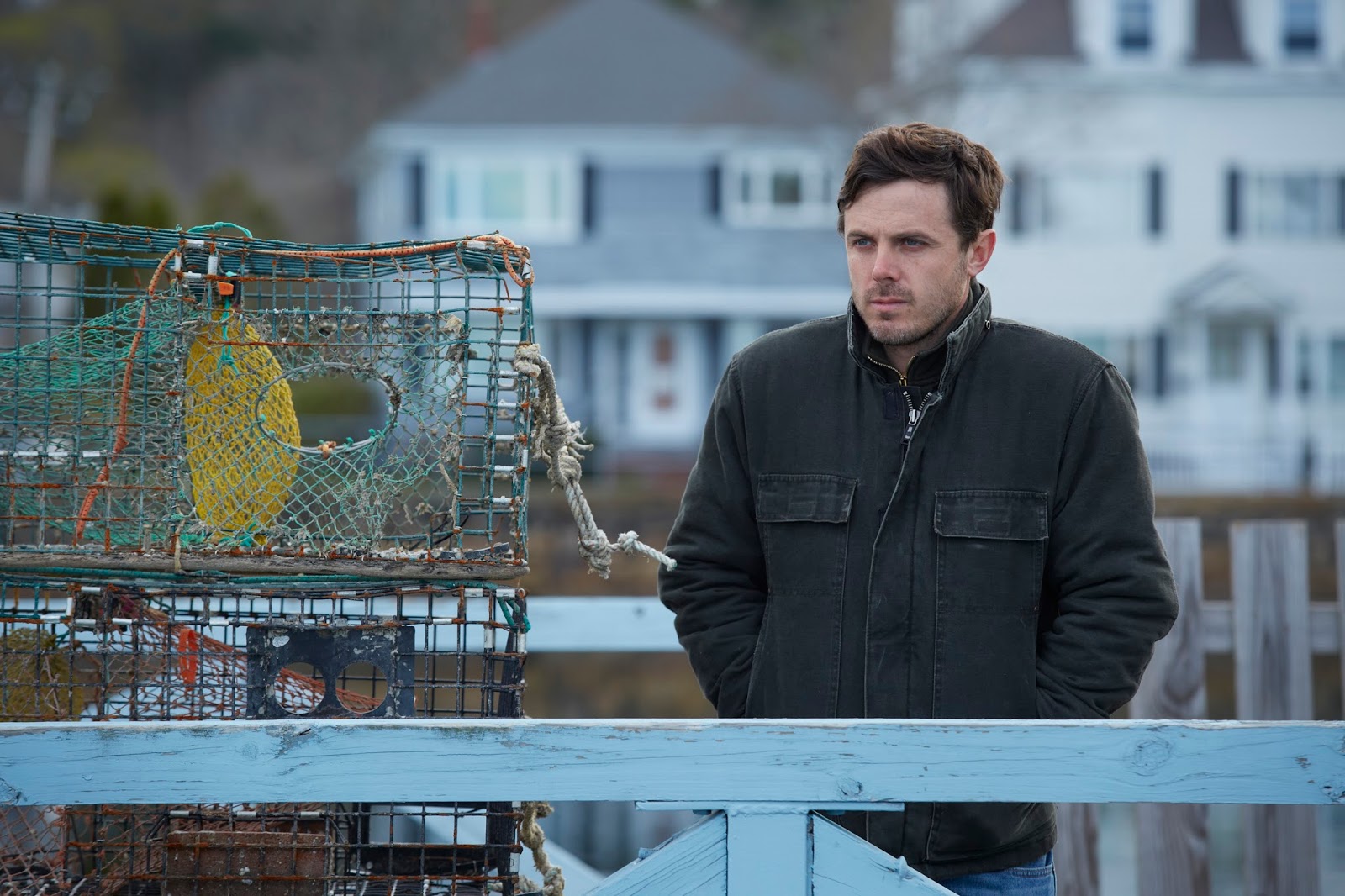
I spent just a couple of days at the Rome Film Fest, but I’ve been lucky enough to see one of the most beautiful movies of 2016. A gem called Manchester by the Sea, written and directed by American film-maker Kenneth Lonergan.
This NY born director is better known for his work as screen player (he co-wrote Gangs of New York by Martin Scorsese, to name just one thing) but he already directed three movies. I was a huge fan of his first feature, You can count on me (2000), which revealed the talent of two actors who had incredible careers afterwards: Mark Ruffalo and Laure Linney, and I followed the troubled story of his second movie, Margaret: originally scheduled for release in 2007, it was repeatedly delayed while Lonergan struggled to create a final cut he was satisfied with, resulting in multiple lawsuits against the studio that produced it! In the end, the movie was released in a 150-minute version in 2011 and Lonergan eventually completed a three-hour extended version which was ready on DVD in 2012! What a story… 
But let’s go back to Manchester by the Sea: Lee Chandler lives in Boston, alone, working as a handyman in different buildings. One day, he received a phone call: his older brother Joe, who suffered from a heart disease, died while on his fishing boat. Lee is obliged to go back to his home town, Manchester by the Sea. He is not happy about it, because something awful happened there years ago. Something Lee can’t forget, something he’s trying to escape from, but his brother’s death and the fact that he has been nominated tutor of Joe’s only son, Patrick (17 years old), don’t leave him any choice. 
He has to go back to Manchester and face his past.
 
One of the most difficult things to express in movies are emotions. 
I mean, in a credible, non-cheesy way. The moment you deal with families, death and sorrow, the risk of ending up doing something tearful and pathetic is really high. But miracles are possible, and this movie proves it.
Thanks to a magnificent structure, a beautifully crafted screenplay and a stunning performance by the actors, Manchester by the Sea reaches a level of complexity, deepness and empathy rarely seen on screens this year.
The first great idea of the movie is the structure, as I just said, and the way the director has used the insertion of flash-backs. In fact, he didn’t even insert them. They are what the movie is made of, with an intense fluidity between the past and the present. It is a different and more sophisticated way to get to know the characters. It is surprisingly emotional and particularly convincing. 

But here, by far, the most convincing thing of all is the actors’ performances, and especially the one of Casey Affleck.
He is so permeated with despair that every unnecessary gesture or word looks like a burden to him. He is transpiring sadness, and there are a couple of scenes where this is so strong that it is almost unbearable. Frankly speaking, I think we are in front of this year’s most amazing male performance.
I have been haunted since the day I saw the movie by this incredible, magnificent scene played by him and Michelle Williams. I don’t want to spoil it for you, but I have to prevent you, this is the most devastating scene I've seen at the movies in a very long time:

I don't know when Manchester by the Sea is going to be out neither in France nor in Italy, but - of course - my strong suggestion is to run to see it.
Be ready: Zazie d'Or will be raining on this movie like the frogs in Magnolia.


MANCHESTER BY THE SEA - Trailer from Mill Valley Film Festival on Vimeo.

giovedì 13 ottobre 2016

Festa del Cinema di Roma

Zazie is going to the Festa del Cinema di Roma!
The image on the poster is simply magnificent: Gene Kelly and Cyd Charisse in a black & white picture by J.R. Eyerman for LIFE Magazine .
As  you could easily imagine, cinematic adventures are ahead of us.
Stay tuned, dear readers!
Zazie


Related Posts Plugin for WordPress, Blogger...