Visualizzazione post con etichetta Jennifer Lawrence. Mostra tutti i post

giovedì 30 giugno 2016

Et la femme créa Hollywood


Have you ever heard about Lois Weber, Frances Marion or Dorothy Arzner?
I guess not. Well, me neither, and I’m a total cinema freak, so there’s something wrong.
I stumbled upon their names for the first time in my life reading an article on Télérama about a movie presented at this year Cannes Film Festival in the section Cannes Classics: Et la femme créa Hollywood by sisters Clara and Julia Kuperberg.
This documentary tells a story kept almost secret until today: between 1910 and 1925, Hollywood was run by women. There was a majority of female film-makers, producers, screen-players, editors, even directors of the studios in all those years before the arrival of Talking Movies and the Great Depression. And before Hollywood became a mere business affair. Full of material coming from unknown archives and enriched by interviews to few specialists of this field like Ally Acker and Cari Beauchamp, the documentary is the story of an indecent descent: the only role for women in Hollywood, from the ‘30s until the ‘80s, has been the one represented by actresses, film-stars, sexual objects of (male) desire.
Nothing more.  


We have to wait until 2008 for having a woman winning the Oscar for Best Movie (Kathryn Bigelow for The Hurt Locker) and only very recently actresses have started to complain about the pay-difference between them and their male counter-parts. It was the case for Patricia Arquette and her fabulous Oscar winning speech in 2015 and in many statements made by rising star Jennifer Lawrence, who pretends to be payed as she should, since audience go to see the movies she plays in because of her.
Patricia Arquette - Academy awards 2015

The sisters Kuperberg declared to have read the names of these pioneers while researching for other stories. Surprised by the fact they never heard about them before, they started to dig a bit, finding two books dedicated to these Hollywood women and written just in the late ‘80s. Among other stories there was the one of Mary Pickford, that everybody remembers as an actress, but in fact was also a producer and a very smart business woman, the one of Lois Weber, who directed no less than 300 movies per year, and especially the incredible one of pioneer Alice Guy, a French woman who moved to Hollywood in 1910 (after being the first female film-maker and producer in the whole world for Gaumont) and created her own studio, Solax.
Mary Pickford
Lois Weber
Alice Guy
In 25 years of activity she made or supervised hundreds of films, of all genres, launched many new directors and even tried sound techniques long before the invention of the sound system. The most outrageous thing is that for her, as well as for many other of these women, the descent has been cruel and pitiless. While they had a big freedom at the time cinema was considered just a simple entertainment, and men weren’t much interested in it (even because they were very often at war somewhere), after 1930 things drastically changed. Female film-makers were capable of making movies of all kind, touching different subjects, even political, on civil rights and many other controversial issues, but when the Great Depression broke out, audience wanted to see lighter movies, comedies, or musicals. That is the time of Hollywood industrialization: big studios are settled in and they immediately eat the small studios created by women. Syndicates show up, starting to make the law, and since women can’t be part of it, they are immediately marginalized.
Obliged to be in shadow of men, relegated in minor roles, some of them decided to quit, some others went desperate and ended their days in poverty and solitude (it was the case of Alice guy).
Studies on early Hollywood era tend to focus only on stories starting from 1930, ignoring the tremendous amount of work made by these incredible women decades before.
Once again, this is so unfair.
I do hope that this documentary will give birth to other studies about this period and that these incredible Hollywood female figures will be acknowledged and recognized by official cinema institutions all over the world.
Once again, girlspower!
The road is still very long.


domenica 31 marzo 2013

The Oscars 2013 - Part 5: Vanity Fair Party

If I didn’t know about the Governors Ball, I was totally aware of the Vanity Fair Party
And I was really looking forward to going there. 
The problem was, half of Hollywood was going there at the same time, and reaching the Sunset Tower Hotel, where the party is held every year, was more difficult (and longer) than we expected. The jet lag hit us in the Limousine and we had to keep talking to each other to arrive at destination still awake.
But then, there we were, at the most fabulous party of the year in LA!
As usual, we immediately understood there were two different kinds of entrance: one for the common people like us and the other one for the stars. The wall of TV journalists was particularly astonishing here: photographers were piling up one above the other and the flashes of their cameras were incessant as well as their requests to the stars passing by.
We arrived at the same time of Jennifer Lawrence (who changed her dress, in the meantime) and the moment was absolutely frantic. Everybody was screaming, taking pictures and going crazy:

Once inside, I had troubles recognising the place. I have been at the restaurant of the Sunset Tower Hotel few years before, but now it looked like a completely different location. Maybe it was the number of stars per meter that made the difference.
At this party, the sensation I felt at the Oscars was even more intense: it looked like one of those dreams where you could see people but people can’t see you. Do you know what I mean? I walked around bumping into any possible star I used to see on a silver screen, feeling invisible. Casey Affleck was talking to somebody in a corner, Jennifer Aniston was walking in front of me and I had to be careful not to step on her red long dress, Robert De Niro was just arrived with his young son, Jason Gordon Levitt (by far one of the nicest people I saw that night) was smiling and having fun, in another room, absolutely packed, the slim and tall figure of Adrien Brody was mesmerising the crowd around him.
It was probably a bit too much. 

After a glass of wine, we decided the overdose of stars had to stop.
The funniest part, though, was just about to start. 
We called our driver, saying that he could pick us up, but we didn’t realize it was rush hour on Sunset Boulevard… hundreds of stars were waiting for their cars as well, and so I enjoyed looking at them in a “normal” situation.
Zooey Deschanel (with a lovely vintage dress!) had both her arms around her boyfriend, and was pretending to be already asleep, Octavia Spencer, her high heels shoes in her hands, was making a TV interview barefoot, Jason Clarke (again!) was looking around hoping to find a lift, Vin Diesel couldn’t count on any super-power to find his limousine, and Rosie Huntington-Whiteley, in an ethereal pink dress, was standing there, pretending to be admired for her stunning beauty while waiting for someone to fly her elsewhere. But the funniest scene was seeing Jane Fonda, in an improbable leopard dress, grabbing a couple of hamburgers from the little van at the roadside that was trying to feed all the stars (knowing that, as a matter of fact, they don’t really eat at parties and so, in the end, they’re starving).
The night was really over, I felt a bit of sadness at the idea that the most magical night of the year was gone, but immediately afterwards I felt happy and lucky, because I knew I could write about it in my blog…

ACKNOWLEDGEMENTS
I really need to thank many people who made my dream come true.
First of all, the Academy people: my eternal gratitude goes to Dawn Hudson, for inviting me, to Heather Cochran for introducing me to Daniel Day Lewis (and much more!) and to Debbie Peters for her precious help.
A big GRAZIE! to my colleague Susanna who offered me to share the hotel room as well as the entire experience with her, and to the Dream Team (Emanuele, Gigi & Jonathan) who drove me anywhere in Los Angeles and supported me every day.
And to my boss, who’s been putting up with my cinema passion for almost 13 years, not only the usual Grazie, Capo! but the reassurance that the procedure for his canonization already started!
Now, guys, the only problem is that it won’t be easy to convince me to let the OSCAR go...

domenica 6 marzo 2011

Nel bel mezzo di un gelido inverno

Il Cinema è un paese per donne?    
Questa domanda mi sorge spontanea ogni volta che vedo un film diretto da una donna e mi rendo conto che lo vivo come se fosse un evento raro. Perché, in fondo, lo è: il numero di registi donne è nettamente inferiore a quello di registi uomini, e questo è un dato di fatto.  Tuttavia, e grazie al cielo, sempre più spesso ci sono donne interessanti dietro la macchina da presa, con cose importanti da dire, storie essenziali da raccontare, e uno stile tutto loro nel farlo. E’ soprattutto dal cinema indipendente americano che arrivano i nomi di ragazze da tenere d’occhio, secondo me. Negli ultimi anni mi è capitato di vedere dei film che mi hanno impressionato per i pochi mezzi e soldi a disposizione per farli e la forza espressiva ed emotiva capaci di suscitare. Tutto merito di ottime sceneggiature, personaggi credibili e commoventi (nel senso più nobile del termine), prove d’attori che lasciano il segno e una sensibilità speciale. Femminile? Si, bisogna dirlo, femminile. E con questo non voglio dire migliore rispetto a quella degli uomini, ma semplicemente diversa. Quella stessa storia, un uomo non la racconterebbe mai allo stesso modo. E il fatto che i protagonisti di questi film siano quasi sempre donne, aumenta di parecchio la sensazione.
Penso ad uno dei miei film preferiti di tutti i tempi: Me, and you and everyone we know di Miranda July (2005), a Wendy and Lucie di Kelly Reichardt (2008), a Frozen River di Courtney Hunt (2008) e al film che ho visto questa settimana: Winter’s bone (Un Gelido Inverno) di Debra Granik

La Granik (nata nel 1963), è una regista indipendente che dopo una serie di premi vinti al Sundance con alcuni corti e con il suo primo lungometraggio (Down to the bone), con questa nuova opera ha ottenuto la consacrazione definitiva, ottendendo un meritato successo mainstream (il film è stato anche candidato a ben 4 premi Oscar). 
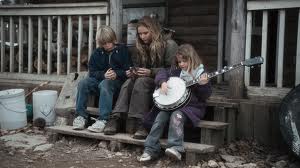
Winter’s Bone racconta la storia di Ree, una 17enne che vive in uno squallido paesino sperduto tra i monti Ozarks del Missouri, in una casa fatiscente che condivide con la madre malata (è praticamente ridotta un vegetale) e i fratellini Sonny, 12 anni, e Ashlee, 6 anni. Ree scopre che il padre (in galera per l’attività più in voga della zona: la produzione della droga sintetica crystal meth), ha ipotecato la casa per pagarsi la cauzione ed uscire. Se non si presenterà davanti ai giudici, la famiglia perderà tutto. Il rischio per Ree è troppo alto, quindi la giovane parte alla ricerca del padre, scontrandosi con una realtà sempre più dura. E’ chiaro fin da subito che lui abbia fatto una brutta fine, ma altrettanto chiaro che nessuno voglia minimamente aiutarla a scoprire quello che gli è successo. Più il destino si accanisce su Ree, più lei sembra decisa a venire a capo della questione. Alla fine, grazie al maldestro aiuto di Teardrop, il fratello di suo padre, e all’ultimo barlume di umanità rimasto ad un gruppo di donne della zona, Ree sembra finalmente intravedere un po' di speranza per il futuro.   
Film durissimo, cupo e desolante, Winter's bone si può definire come una sorta di neo-realismo all'americana: ai limiti del documentario, ma con la marcia in più della pura finzione, il film è una discesa all'inferno che sembra una fiaba gotica (compresa di vago lieto fine). Ci sono momenti insostenibili, momenti potentissimi e momenti con qualcosa di speciale che ti resta dentro. Il dialogo di Ree con il militare passato alla sua scuola per reclutare potenziali soldati, ad esempio, per me è indimenticabile. La pellicola è illuminata senza sosta dal volto di Jennifer Lawrence, una giovane attrice (nella realtà ha 21 anni) che qui dimostra un talento straordinario. Di una bellezza disarmante, anche senza trucco, sporca e infagottata in abiti invernali, la Lawrence si carica tutto il film sulle spalle. Sicura, testarda, e senza paura, pur di assicurare una casa alla madre e ai fratelli, affronta l'inaffrontabile con una forza e una dignità da Magnani americana. Nel film non c'è quasi mai una tregua alla miseria umana che le tocca sopportare. Solo la presenza di un'amica a confortarla e darle una mano, altrimenti è sola, ma tutt'altro che vittima della situazione. L'altro personaggio notevolissimo che il film mette in scena è quello dello zio di Ree, Teardrop (interpretato da uno dei migliori attori americani in circolazione, John Hawkes, già protagonista maschile di Me, and you and everyone we know e della serie HBO Deadwood): dropout magrissimo e dallo sguardo folle, dapprima riluttante ad aiutare la nipote, fa uscire a poco a poco (e molto alla sua maniera, diciamo) tutta la sua umanità e il suo coraggio.
Si esce dal film incapaci di lamentarsi di nulla: del freddo, della stanchezza, della noia di una qualsiasi giornata di lavoro. Ci si sente piccoli, inutili e un po' miserabili in confronto a quello che Ree ha dovuto sopportare ed affrontare.
Girls power. Sì, quello vero.
Related Posts Plugin for WordPress, Blogger...