Visualizzazione post con etichetta Lars Von Trier. Mostra tutti i post

martedì 17 giugno 2014

The Crying Game

 
On Sunday night, while the rest of the nation where I live was looking at the first football match involving Les Bleus, I realized that Arté was showing Secret and Lies by Mike Leigh. 
I know this movie by heart: Leigh (my readers are well aware of this) is one of my favourite directors of all time and I consider Secrets and lies an absolute masterpiece.
I immediately wrote something on my Facebook page suggesting my French friends who were not interested in the World Cup to watch the movie, but I didn’t expect I would have watched it myself all over again for the 10th time. And I was even more surprised when, looking at my favourite scene, I started to cry… well, it would be more accurate to write I started sobbing.
Is this happening to you too? I mean: am I the only one who is capable of crying over and over again at a certain scene of a certain movie, no matter how many times I watched it?
Some movies touch a particular part of our soul, I guess, and there is nothing we could do about it. Usually people are ashamed to admit they cry in cinemas, but I am not. I proudly confess to weep very often watching a movie, and I decided to publicly confess Zazie's TOP 5 MOST EMOTIONAL MOVIES:


5 - My life without me by Isabel Coixet (2003)
I really love Isabel Coixet’s cinema and I think My life without me is an underestimated great movie of cinema history. Ann, a 23 years old wife and mother living in Vancouver, finds out to have an inoperable cancer. She decides not to tell her husband, her two young daughters and her mother, and she prefers to prepare them to the life “without her”. Of course, the subject would break anybody’s heart, but Coixet never takes advantage of its tearful potential. The film is simple, candid and full of life, and Sarah Polley is amazing in the role of Ann.
It it almost impossible, though, not to weep every now and then. 
I personally did it - non stop - for the last 45 minutes of the movie.

4 – Au revoir les Enfants by Louis Malle (1987)
Based on a real story that happened to Louis Malle when he was a young boy under the German occupation, this movie builds up, scene after scene, a degree of emotion difficult to handle. On the last scene, when the Gestapo embarks some students and the priest and you hear him saying: “Au revoir, les enfants!”, I defy any single human being not to burst into tears like a little baby. The most heart-breaking quote of cinema history.


3 - Secrets and Lies by Mike Leigh (1996)
I have cried at every Leigh’s film, but this wins hands down.
I guess I cry so much watching this movie partly because Leigh has a special way of showing people in their most fragile and human conditions, and partly because the actors play so amazingly well that I am shaken by their immense talent. In this scene, one of the most beautiful, compelling and moving of Leigh’s cinema (and of cinema tout court), Brenda Blethyn is able to pass from incredulity to bewilderment, from hilarity to desperation in a way that it’s simply impossible to forget. If you don’t cry watching her, your heart is made of stone, believe me:

2 - Breaking the Waves by Lars Von Trier (1996) 
This film is present in almost all my TOP 5 movies of no matter what category, and I guess you have to get used to it, because it was one of those films having an incredible impact on my life. As I already had the chance to write in this blog: the death of Bess McNeil is one of the saddest moments I have to endure at cinema. Until today, it is just impossible for me not to drop a tear if I hear the first notes of Life on Mars by David Bowie.

1 - Everyone’s Waiting - Final Episode of Six Feet Under by Alan Ball (2005)
I know, this is not a movie I saw in a cinema. This is not even a movie, but I can’t deny that my most epic desperate moment in front of a screen was the final scene of the final episode of Six Feet Under. Friends who watched it before me had warned me about it but nothing could have prepared me for this emotional turmoil. We are talking about a series of almost 10 years ago, so I don’t think it will be a spoiler for anybody if I write that Alan Ball showed us the death of every single character in the story. Not a real surprise, since the main theme of this series actually is death, but after 5 seasons I was so attached to the Fisher family, that I started to cry at the first death and I stopped many hours after the last one. I cried so much that next day, arriving at the office, all my colleagues asked what tragedy had occurred to me.
On the side cover of Six feet Under's box set (having the shape of a grave, ça va sans dire!) you can read these words: Everything. Everyone. Everywhere. Ends.
They were clearly underestimating my tears.

domenica 30 marzo 2014

Fight(s) Club

I am not a particularly litigious person.
I don’t usually like that much to quarrel and discuss, but if there is one thing in life I am ready to fight for, it is cinema. Touch a movie I love (or I don't love), and you’ll see.
The reasons why we like or hate a certain film are often mysterious and unpredictable, but I am convinced that this is part of cinema’s charm.
Sometimes we love movies because we consider them perfect and sometimes we are crazy about films plenty of flaws but absolutely irresistible to us, no matter what the most important cinema critics write about them.
So, dear readers, here’s my TOP 5 List of movies I have most fight for or against in my whole life: 
1 -  BREAKING THE WAVES by Lars Von Trier (1996) 
A milestone, in my life. The strongest cinema experience I ever had: I saw it 4 times in theatres and every single time it was like a tsunami (easily created by my tears!). I adore this film and I had the most outrageous fights over it. A lot of people (mostly men) don’t like it. After almost 20 years, I could clearly see that the film was striking some very personal chords and my obsession with Bess McNeill at that time says something about it, but I still consider it a masterpiece and I would be ready to fight again and again and again over it. Little Bess For Ever!
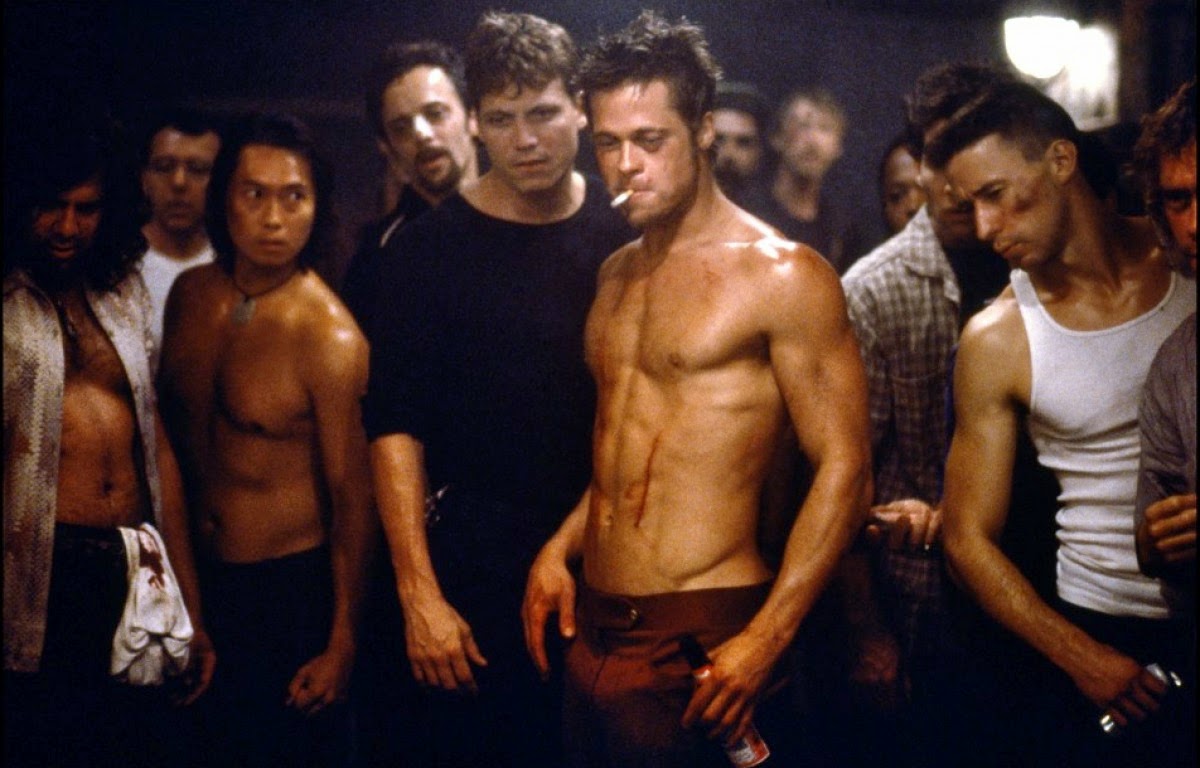
2 - FIGHT CLUB by David Fincher (1999) 

Everybody knows it. There is no human being in this world that gets on my nerves like David Fincher. And my hatred for him started with this movie. I could have opened a fight club with all the fights I had over it (most probably with the same men who didn’t like Breaking the Waves...). I didn’t get the “free the animal that is in you/can’t you see we are all losers ‘cause we buy Ikea furniture?” kinda things. Not to mention that ridiculous final scene (you gotta be kidding me, right?). Things didn’t get better between me and David with his further movies. I think he is the most misogynist film-maker of cinema history. What can I say? I prefer directors filming “The man who loved women” to the ones filming “Men who hate women”.
3 - TREE OF LIFE by Terrence Malick (2011)
The problem with this movie, is that it’s almost a sin to declare that you don’t love it. I had a tremendous fight with an unknown person on Facebook, once. This man wrote something like: Who doesn’t like Tree of Life it’s because he/she doesn’t have the cultural supports to understand it!!! I almost killed him. That’s the thing. There is a moral judgement involved here, somewhere, somehow. And I can’t stand it. Even if Tree of Life (or any other movie of cinema history) would be considered the most beautiful movie of all time (and IT IS NOT), I think I would have the right to say that I don’t like it without having somebody telling me that it’s because I’m ignorant. I’m curious to know where all those Malicks fans where at the time of To the wonder, the movie he has done after Tree of Life. It was so awful that nobody had the guts to talk about it. Or maybe it’s because nobody had the cultural supports to understand it??! 
4 - ONCE UPON A TIME IN AMERICA by Sergio Leone (1984)
I don’t give a damn about Sergio Leone and I dislike this movie. 
People almost faint when I declare this kind of things but what can I say? This is how I feel about this film-maker and about the movie which is considered his masterpiece. It was one of the most painful visions of my life and I was terrified by the violence in it. And no, I don’t think Robert De Niro is the most incredible actor of all time. I think he is a very good actor who played in many excellent movies but I also think he has done a lot of crappy films and that he wasn’t that good in them. 
Ok, end of my coming out!
5 -  AMOUR by Michael Haneke (2012)
Together with Fincher, Haneke is my second least favourite film-maker of all time.
He makes me feel sick any time I see one of his movies. This one was particularly painful to watch (not as much as The White Ribbon, I reckon, but I definitely had more discussions over Amour). What I can’s stand about this man, is his lack of empathy, his judgmental, cold and distant attitude. Enough of this. Jean-Louis Trintignant and Emmanuelle Riva are absolutely amazing in it and they are the only reasons why I watched this massacre until the end. I guess Haneke would do a better job making a movie called Hate. 
I’m sure he will be great at it!

lunedì 27 maggio 2013

In the Mood for Vengeance

Sometimes, I get interested in a film-maker through an actor.
It has been the case for Nicolas Winding Refn, who I discovered thanks to my passion for Mads Mikkelsen. Besides the Pusher trilogy, the two made together a very strange film called Valhalla Rising
. On paper, Winding Refn doesn’t have much to please me. His cinema is famous for being extremely violent and I’m famous for being extremely irritated by violence on screen. But, as it is often the case in this life, sometimes we like things we are not supposed or we don’t expect to like. 
Nicolas Winding Refn and Mads Mikkelsen on the set of Valhalla Rising
I guess his cinema attracts me because it’s made of opposites: his movies are almost silent or too filled with words, the main characters are real heroes or complete losers and the most romantic scenes can be immediately followed by the most violent ones (Drive's elevator scene docet). Violence in Winding Refn movies is never cold, though. This is why I think it’s bearable. It is always driven by emotions, it’s coming from the evident flaws of human beings, and very often it’s perpetrated on awful kind of people to get justice (well, ok, I admit it: it’s a very primitive kind of justice). 
Also, I have to confess I really enjoy Winding Refn’s interviews: he is always very funny, interesting, confused, and completely crazy. Apparently, he is teetotal, colour blind and dyslexic. As a bonus, his father is the editor of Breaking the Waves by Lars Von Trier.  There are enough elements to become a fan, as far as I’m concerned. 
Nicolas Winding Refn
Winding Refn became a mainstream film-maker just a couple of years ago via the movie Drive, where Ryan Gosling found his consecration as an actor. Having particularly liked to work together, the two decided to team up for another movie, which has been selected for the competition at this year’s Cannes Film Festival: Only God Forgives. Since Drive became kind of an iconic movie, many were waiting for their new collaboration. I have the feeling, from what I wrote in many critics these days, that people have been disappointed by it, but I didn’t. 
Nicolas Winding Refn and Ryan Gosling on the set of Only God Forgives
In fact, the thing I liked about Only God Forgives, is that it is the absolute anti-Drive. 
So, if you want to see Drive 2, well, forget about it. While the guy played by Gosling in Drive was a powerful one, in this one he’s powerless and sexually impotent (as it was the case for Mikkelsen in Pusher 2). Julian is supposed to run a drug dealing business (the movie is set in Bangkok) but he isn’t tough enough. He is subjugated by his eldest brother and, when this one is massacred for having raped and killed a 16 years old girl, Julian is not able to take care of his vengeance, as his (lovely!) mother asks him to. And last, but not least, he also has an enormous Oedipus complex: the guy is a complete disaster, I assure you. 
The only thing the driver and Julian has in common, is that they are not very talkative kind of guys. I read that Gosling and Winding Refn are dreaming of making a silent movie together, one day, and I hope that day will be soon.
Ryan Gosling as Julian
And while in Drive the music was a super important element of the movie, with a bunch of songs that stayed in the collective imagination, in Only God Forgives the music is obscure, obsessive, and the only hits are the pathetic, melodic Thai songs performed in karaoke restaurants by the real hero of the story: Chang. This man is a retired policeman, a wizard of the sword, a silent guru and a merciless avenger, whose presence (real and unreal) will haunt Julian for the whole movie. 
Vithaya Pansringarm as Chang
The other star of the movie is my favourite character: Crystal, probably the most awful mother on screen ever, played in an exceptional way by a very intelligent actress, Kristin Scott-Thomas. Usually hired to embody sophisticated, ultra-bourgeois, complex women, Winding Refn had the brilliant idea to transform her in a monstrous creature, a modern Medea dressed in Versace (the resemblance with Donatella Versace is actually pretty scary), a real bitch, able to waste his son’s life in the space of a couple of sentences (the dinner scene is absolutely to die for). 
Kristin Scott-Thomas as Crystal
The movie builds up very slowly, obliging the audience to hold back the rhythm, to quit defences, and be ready to enter into the story and into this dark, gloomy, ultra-violent world. You can take it or you can leave it, but if you are patient enough, you'll be rewarded by many unforgettable scenes (oh, the Thai child in the weelchair!).
Filmed in a spectacular way, Winding Refn confirmed his talent for an astonishing mise-en-scène, somewhere between Scorsese and Lynch with a twist (in this Far-East location) of Wong Kar-Wai. 
But if the Hong-Kong film-maker was in the mood for love, it is clear that the Danish one is more in the mood for vengeance. 
Si salvi chi può!

venerdì 9 novembre 2012

Jagten

Nel 1995, i registi Danesi Lars Von Trier e Thomas Vinterberg (39 e 26 anni, all'epoca), redigono e firmano a Copenhagen il manifesto cinematografico conosciuto sotto il nome di Dogma 95.
Di solito, i movimenti cinematografici vengono riconosciuti in corso di attuazione o più facilmente dopo qualche tempo: la Nouvella Vague francese, il Neo Realismo italiano, il Cinema Novo brasiliano, il Free Cinema inglese, sono diventati categorie soltanto dopo che un gruppo di opere aveva chiaramente manifestato lo stesso stile, lo stesso tipo di storie, lo stesso modo di girarle. Von Trier e Vinterberg, invece, decidono di fare esattamente l’opposto. Scrivono alcune regole e proclamano che qualsiasi regista al mondo voglia mettersi a fare film secondo quelle regole, sarà considerato un regista Dogma. L’idea alla base del manifesto era essenzialmente quella di promuovere un cinema più “puro”: via gli effetti speciali, via gli investimenti miliardari, via l’ego smisurato dell’artista (il nome del regista non deve mai comparire, tanto per dirne una). Il loro decalogo, per la verità, è al limite dell’estremo: no a luci artificiali, no a scenografie, no all’uso della musica. Non c’è da stupirsi se il Dogma viene ben presto soprannominato “Voto di Castità”. Per quanto assurdo tutto questo possa sembrare, il manifesto nei suoi 10 anni di vita (nel 2005 è stato infatti ufficialmente “chiuso”), ha prodotto un po’ dappertutto nel mondo una manciata di film molto interessanti, e anche un paio di piccoli capolavori.
Lars Von Trier e Thomas Vinterberg ai tempi del Dogma
Il primo film Dogma, ad esempio, è stato anche l’esordio di Vinterberg: Festen, film sommerso da una marea di premi ed enorme successo di critica e pubblico. Personalmente, Festen a parte, io ho adorato alcuni film dogma considerati minori, come Mifune di Søren Kragh-Jacobsen e Italian for Beginners di Lone Scherfig, due chicche che vi consiglio di recuperare.
Vinterberg, colto alla sprovvista dal successo planetario di Festen, ha fatto fatica a proseguire con una decente carriera cinematografica. Quest’anno, è ritornato al Festival di Cannes con la sua ultima opera: Jagten (La Caccia), riscuotendo di nuovo un gran successo e portandosi a casa uno dei premi più importanti (e finora secondo me anche l’unico sensato dato dalla giuria), quello a Mads Mikkelsen (lo ADORO!) come miglior interprete maschile.
La settimana scorsa, in un’anteprima speciale al Cinéma des Cinéastes (il film uscirà in Francia il 14 Novembre e in Italia il 23 Novembre), Vinterberg ha incontrato il pubblico parigino per discutere del film.
La storia: Lucas, un quarantenne appena uscito da un doloroso divorzio, sta cercando di rifarsi una vita. Le cose sembrano andargli abbastanza bene: ha accettato un nuovo lavoro come aiuto-insegnante in una scuola materna, suo figlio Marcus sta per andare a vivere con lui e Lucas sembra anche aver trovato una nuova compagna. Questa serenità è però destinata ad essere spazzata via in breve tempo: Klara, una bambina di cinque anni (nonché figlia del suo miglior amico), confessa alla direttrice della scuola di aver subito attenzioni di natura sessuale da parte di Lucas. La direttrice, sconvolta da quello che ha appena sentito, mette immediatamente in moto la macchina infernale che rischierà di schiacciare la vita dell'uomo, del tutto innocente.
Come ha giustamente fatto notare Vinterberg durante la discussione seguita al film, Jagten è l’anti-Festen assoluto. In Festen, dei bambini innocenti erano costretti a subire le attenzioni morbose di un adulto (il padre), che la faceva franca fino alla famosa festa in cui il figlio si decide a raccontare tutto di fronte agli altri componenti della famiglia. In Jagten il problema è opposto: un uomo adulto viene accusato da una bambina di aver compiuto degli atti osceni, e deve passare attraverso le prove più dure per riuscire a dimostrare agli altri la propria innocenza. Il tema è ovviamente molto delicato, e Vinterberg dimostra un gran coraggio nel “mostrare” due aspetti davvero poco rappresentati al cinema: il fatto che i bambini possano e sappiano mentire, e il fatto che anche nei primissimi anni di vita possiamo provare un sentimento simile all’innamoramento nei confronti di soggetti adulti. Klara è chiaramente affascinata da Lucas ed è proprio di fronte al suo rifiuto (in quanto adulto responsabile) verso alcuni comportamenti inattesi della bambina, che quest’ultima reagirà “contro di lui”.
 
Costruito in maniera lineare e molto rigorosa, Jagten fa crescere la tensione a poco a poco, generando un sentimento di oppressione e ingiustizia che permea la pellicola in maniera costante ma dilagante. Lo spettatore, sapendo dell'innocenza di Lucas, soffre con lui, ed è inevitabilmente portato ad una grande identificazione con il protagonista, perché tutti potremmo essere vittima di un simile errore, e chi sarebbe pronto a crederci, contro la parola innocente di un bambino? Quali amici resteranno al nostro fianco? Chi continuerà ad amarci dei nostri familiari? Chi avrà ancora fiducia in noi? Senza mai dare giudizi morali, ma anzi facendo ben capire i drammi e i dubbi nascosti dietro ciascuno dei personaggi, Jagten impressiona per forza stilistica e capacità di non abbandonarsi mai a facili vie d'uscita o scorciatoie sentimentali. La sceneggiatura è solidissima, certo, ma qui come al solito gli attori fanno la differenza. Intanto, chi ha trovato una bambina di 5 anni così brava a recitare? Mentre su Mikkelsen, che volete che vi dica, per me è uno dei più bravi attori in circolazione. Se qualcuno di voi ha familiarità con il cinema di un altro grande regista danese, Nicolas Winding Refn, sa di cosa sto parlando: dalla trilogia Pusher al delirio Valhalla Rising, Mikkelsen dimostra una versatilità ed una capacità di cambiare registro di rara potenza. Qui è tutto in sottrazione, con rare esplosioni di rabbia che lasciano senza fiato. Semplicemente eccezionale.
Vinterberg, ritrovata la sua vena più personale, ritornato - se posso osare - più "dogmatico", dà vita ad un film dal quale non si esce indenni (magnifica, lo vedrete, la scena finale!). Non sono stupita che abbia citato come primo riferimento per il film Fanny e Alexander di Ingmar Bergman. 
Perché nella vita, si sa, dovendo avere dei modelli, tanto vale puntare in alto! 

giovedì 19 novembre 2009

The cinema of Andrea Arnold


How many special movies do you have the chance to see, every year?
I mean, very special ones, movies able to change your perspective on something, able to move something deep inside you, to leave you breathless and speechless? Not many, as far as I’m concerned.
In these last years, I’ve seen two movies by the same film maker that had such a big impact on me and I’m very happy to write that the man behind the camera is… well, a woman.
Her name is Andrea Arnold.
Born in England in 1961, Arnold won an Oscar in 2003 for her short movie Wasp. She wrote and directed her first feature film, Red Road, in 2006 (winner of the Jury Prize at the Cannes Film Festival and part of the Advance Party project created by Lars Von Trier) and this year she’s been back with Fish Tank (winning again the same prize at the same Film Festival).
Arnold’s stories are very bleak. They are set in bleak places around UK and they talk about bleak people: not happy, not rich, not particularly beautiful and very often traumatised by some not-very-funny event.
So, I know what you’re thinking right now: why on earth Zazie is telling us to go and see such depressing movies? Well, it is because these movies are not depressing, are just great.
Red Road tells the story of Jackie, a Glaswegian CCTV operator, a lonely and sad woman in her 30s who spends her life watching other people’s lives through the monitors, until the day she catches a glimpse of a man and this seems, somehow, to change her life dramatically. I’m not going to tell you who this man is or why he is so important for Jackie: if this movie’s atmosphere is so fascinating, it is mainly due to this mystery. You don’t know anything about it, you desperately try to understand why she is doing what she is doing, and you’ll be aware of that just towards the end. Red Road is a very dark and very slow movie but there is a fire burning inside it, and you can feel it since the beginning. This woman seems dead, inside, but she is not. You are touched by her fragility, fascinated by her willing to pursue her idea (wherever this will lead her) and when you finally find out what’s going on, you just want to cry for the rest of the movie. In Red Road there is one of the strongest and most beautiful sex scenes I’ve ever seen on screen and, I know half of the population will disagree with me, but I think this is because there’s a woman behind the camera. Ok, I wrote it. And I take full responsibility for that.
 The main character of Fish Tank is, once again, a woman: Mia is a teenager living with her single mother and a younger sister in a dingy housing estate somewhere in the south of England. The only thing she really enjoys in life is to dance all alone on hip-hop tunes. At school she is a disaster and her relationship with the rest of the world is quite dramatic: no friends (her bad temper and bad manners don’t help) and no chances to be supported by her mum (kind of an alcoholic). Something changes with the arrival, in their apartment, of Connor, her mum’s new boyfriend (played by Irish-German actor Michael Fassbender, whose arrival would change any woman’s life on planet earth).
Mia, who spends her time defending herself against other people and the world outside, by meeting Connor (probably the first adult who seems genuinely interested in her as a human being), opens up to new feelings and new hopes. Things won’t turn very well with him, in the end, but the process has started, and a new phase of her life is spreading in front of her.  
Supported by an outstanding cast (newcomer Katie Jarvis, found by Arnold while furiously fighting with her boyfriend on a station’s platform, English actress Kierston Wareing, already appreciated in It’s a Free World by Ken Loach, as Mia’s mum, and the above mentioned Michael Fassbender, by far the best actor of his generation), Fish Tank is a vibrant, emotional story.
There are at least a couple of perfect moments: every time Mia finds herself close to Connor and this simple contact produces in her a physical upsetting (like a crack in the fish tank she constantly feels trapped in) and the dancing scene between Mia, her mum and her (irresistible) little sister.
Maybe they’re desperate, maybe this world is a shitty place to live in, but everybody has the right to hope and to look for bliss.

Related Posts Plugin for WordPress, Blogger...