giovedì 13 gennaio 2011

The Cinema of Mike Leigh

Do you remember when I wrote that there are film makers able to change your life?
British director Mike Leigh is one of those, for Zazie.
There are no directors as Leigh capable of making you feel unsettled. 

He has this incredible capacity to touch the most vulnerable parts of you: to show the weakness, the stupid vanity, the misery, the unhappiness, the complexity of human minds and souls. And yet, he does that with such compassion, that you also feel accepted and loved, besides all your flaws. Leigh’s movies are cathartic, deep, witty and tragic at the same time. In many cases, they also are, as far as I am concerned, simple masterpieces.
Since his debut in the early ’70s at the BBC, Leigh showed his skills to reflect the absurdity and ridiculousness of modern society with a merciless sense of humour and a love/fascination for real losers. Did you like the cruelty of
The Office (British version, of course)?, then you will be crazy about his Abigail’s Party, where a middle-class couple sets up at their place a fancy apéro for few friends. 

A jewel! 
Leigh’s first feature film, Bleak Moments (and believe me, you got exactly what the title promises you), is dated 1971 and it has been followed by a bunch of great movies such as Hard Labour, Meantime, High Hopes, Life is Sweet. 
In 1993, Leigh wrote and directed one of the best films of the ‘90s, the tough and gloomy Naked, for which he won a prize at the Cannes Film Festival as Best Director. 
The Palme D’or arrived in 1996, thanks to the MAGNIFICENT Secrets and Lies (the story of a young black woman who, once her adoptive parents are dead, goes in search of her real mother) and the Golden Lion in 2004 thanks to Vera Drake (the story of a woman practising abortions in the London of the early ‘50s).
Naked
Secrets and Lies
Vera Drake
Leigh is famous for his particular way of working, especially with actors. 
Once the cast of a movie is done, he starts rehearsal few months in advance and then, at the moment of filming, the shooting is very quick, because actors are so much into their characters that they don’t need any further indication. Leigh’s method proved him right, because the performances of his actors are always outstanding and they are regularly covered with prizes. The other interesting thing is that he tends to always use the same people. You can even find on internet a chart with all the recurrent names in Leigh’s movies. Among the most “familiar” ones, there are Alison Steadman (who’s been Leigh’s wife for almost 30 years), Peter Wight, Ruth Sheen, Lesley Manville, Jim Broadbent, Phil Davis, Timothy Spall, Brenda Blethyn, Imelda Staunton, David Thewlis and the late Katrin Cartlidge (I miss her so much!):
The other day I went to see Leigh’s last movie, Another Year, and, once again, I was puzzled by his capacity of showing the ups and downs (especially the downs, actually) of human life. Tom and Gerri (yes, that’s funny), a middle-aged couple, have their own routine: to work, to take care of their little garden, to see once in a while their only child Joe and to have dinner with few friends. Tom and Gerry look genuinely happy. Two very lucky people: lucky to have found each other, to have nice jobs, a common passion for gardening and a lovely son (who has just introduced them his nice girlfriend). You can’t say the same about their friends Mary, a middle-aged single woman with a collection of bad love affairs and a serious alcoholism problem, or Ken, who’s facing exactly the same difficulties. Seasons pass but things don’t change, and once winter arrives, Mary’s condition looks more desperate than ever.
Quintessentially Leigh-esque, Another Year is a new great example of his humanity: Mary and Ken can be so unbearable, so hopeless, that you can easily decide to hate them, but if you allow yourself to get close to them (because this is the scary thing about Leigh's movies: you constantly think that that man/woman can actually be you), you will realize how much you feel for them. The Winter chapter is perfect in its simplicity: even the way Leigh is filming, with that cold and grey light, with the characters ready to surrender to their faith, to the cruelty of life.
High Hopes are gone, and we are left just with the Bleak Moments.
But, at least, we are not alone in this world.


mercoledì 5 gennaio 2011

My name, is Michael Caine

E insomma ecco che per puro caso vengo a scoprire che Sir Michael Caine terrà una Master Class al Forum des Images.
Il Forum des Images è un posto davvero bello, peccato solo che si trovi all’interno delle Halles (che è forse il posto più brutto di tutta Parigi): ha diverse sale cinematografiche con un’ottima programmazione, un caffé, tantissimi eventi cinefili, e una biblioteca specializzata in cinema che si chiama François Truffaut. Insomma, ha tutto quello che serve per piacermi.
Le Master Class del Forum sono famose: invitano un regista o un attore o uno sceneggiatore, e lo fanno parlare per due ore davanti al pubblico (di solito in un Q&A con Pascal Mérigeau, critico del Nouvel Observateur). Mica male. Peccato sia praticamente IMPOSSIBILE trovare un posto, per queste lezioni. Io ci avevo già provato con James Gray, Xavier Beauvois, Barbet Schroder e per lo sceneggiatore di Dexter, ma niente da fare. Così, quando ho tentato con Michael Caine e mi hanno confermato l’acquisto del biglietto (5 Euro, per Michael questo ed altro), ero fuori di me dalla gioia!
Seduta in un buon posto in quarta fila, le luci si sono spente e voilà: sullo schermo sono apparse le immagini di alcuni dei film più importanti di una carriera cinematografica sterminata (più di 150 pellicole all’attivo). Quando le luci si sono riaccese è comparso lui: Sir Michael Caine, 77 anni, tutto di nero vestito, barba bianca e occhiali sottili sugli occhi chiari. La classe, quoi! Doverosa standing ovation del pubblico (gente di tutte le età, ma età media comunque molto giovane) e poi lunga chiacchierata con questa persona eccezionale. Io devo dire la verità: Caine lo amo molto come attore, ma come essere umano lo trovo addirittura irresistibile. Anche perché rappresenta tutto un mondo, quello dell’Inghilterra degli anni ’60-’70, con quello stile così cool: abiti tagliati in Savile Row, montatura scura dell’occhiale, sigaretta sempre all’angolo della bocca, sguardo un po’ truce e british sense of humour in dosi massicce, il tutto condito dall’accento cockney più poderoso che si sia mai sentito.
Nato nel 1933 in una famiglia della working-class londinese (e cresciuto in un quartiere al limite del malfamato), Caine non era certo destinato ad una vita di privilegi. Al suo ritorno dalla guerra di Corea, ha iniziato a sbarcare il lunario con mille lavoretti, poi la sua passione per la recitazione l’ha portato a teatro (per 9 anni) e infine è approdato un po’ per caso al cinema, senza mollarlo più. “A Londra negli anni ’60 tutti prima o poi diventavano famosi, tutti tranne me”, ha raccontato. In quel periodo divideva l'appartamento con "un certo" Terence Stamp che, diventato appunto famoso dall’oggi al domani, se lo portava sempre appresso perché Caine avesse finalmente qualcosa di decente da mangiare. La fama, alla fine, è arrivata anche per lui: il primo film importante è stato Zulu (1964), seguito a ruota da una manciata di film che hanno fatto epoca: The Ipcress File (1965), Alfie (1966), The Italian Job (1969) e Get Carter (1970). In quegli anni, persino il fatto che il protagonista maschile portasse un paio d’occhiali era stata una specie di piccola rivoluzione. Nel 1972, Caine viene chiamato a recitare in un film molto particolare, una sorta di “film da camera”, con due soli attori in scena: Sleuth. Solo che quello che recita con lui, è il più famoso attore del mondo, Sir Lawrence Olivier, del quale Caine ancora oggi parla con assoluta ammirazione: “Olivier mi ha fatto il complimento più bello che abbia mai ricevuto. Alla fine delle riprese mi ha detto: pensavo di avere un assistente, invece ho avuto un partner”. Trascinato dal successo, Caine si trasferisce a vivere a Hollywood. Nel 1985, riceve il suo primo premio Oscar grazie ad un film di Woody Allen, Hanna and her sisters (in caso di rogo, il DVD di questo film lo salvo sicuro!), il secondo lo riceve invece nel 1999, per The Cider House Rules. Caine è stato bravissimo a raccontare se stesso: ha mischiato il pubblico con il privato (racconti su John Huston che gli propone al telefono di recitare in un suo film e lui non ci crede, racconti sui modi bizzarri in cui il padre e la madre percepivano il suo successo), non ha mai perso il senso del ritmo né il sense of humour ("danno così tanti dei miei film in TV alle due di notte, che tutti pensano che io sia già morto") ed è stato sincero anche sui momenti meno belli (quando era stanco di girare, quando ha capito che a causa della sua età la condizione di film star aveva i giorni contati). Sembrava genuinamente felice di essere a Parigi e ha annunciato con orgoglio che il giorno dopo avrebbe ricevuto la Légion d’Honneur de la Republique Française. Prima di andarsene, infine, ha teneramente rivelato che venerdi sarà il suo 38° anniversario di matrimonio e ha chiesto alla moglie, Shakira, una bellissima signora indiana seduta tra il pubblico, di alzarsi in piedi perché potessimo farle gli auguri.
Caine (questa è la cosa che più mi ha colpito di lui) ha confessato di aver sempre adorato il cinema e gli attori, e che per tutta la vita gli è sembrata una cosa straordinaria, quasi da non credere, il fatto che lui facesse effettivamente parte di questo gruppo di persone. Persino quando era a Hollywood, e Shirley MacLaine gli organizzava un party di benvenuto, Caine perdeva la testa nel veder arrivare Frank Sinatra o Gloria Swanson, o nell’incontrare Fred Astaire al supermercato mentre faceva la spesa con un sacchetto di plastica in mano.
“Un giorno, passeggiavo per Beverly Drive, e incrocio queste due vecchie signore, due attrici mitiche dell’epoca d’oro di Hollywood, io le guardavo ammirato, senza avere il coraggio di fermarle. Era l’anno in cui ero stato candidato all’Oscar per Educating Rita. Mi hanno avvicinato loro e con aria sorniona mi hanno detto: hey, noi abbiamo votato per lei!”.
E chi, Sir Michael, non lo farebbe?


lunedì 3 gennaio 2011

Distant Voices, Still Lives

I have few certainties in life, and one of them is that British and Irish actors are the best in the world.
This is something I have learnt through the years, watching hundreds and hundreds of movies. It is difficult to define what makes the difference, it is probably a combination of qualities, their theatrical training and also the evidence that they could express the complete range of human feelings without much trouble. Less flamboyant than the American actors, but richer in subtlety, sharpness, and intensity, British actors are a category of their own. This is why I was immensely sad this morning, when I read we have lost one of them.

When I think about Pete Postlethwaite, I think about one of my fondest cinema memories.
I was 19 years old and already a cinema freak, craving for special, vibrant, outstanding movies, when I saw one of these precious and rare pictures in a Milan cinema: Distant Voices, Still Lives by British film-maker Terence Davies (who is, by the way, an absolute genius). Incredibly enough, the movie was in Original Language (I still remember people quitting the line when they heard the news!!!), and once the movie started I understood why: there were just few dialogues, many silent moments and a lot, a lot of songs. It was a movie with an incredible personality, an incredible light, an incredible cast. Based upon the film-maker’s family history, it was set in Liverpool and it was unbelievably sad and gloomy. I was crazy about it. Postethwaite played the Father, and not a very nice one (quite the opposite: abusive of his wife and children, a terrifying human being) but his particular face and his way of acting marked me for ever.
Few years later, I saw him playing another father, but a completely different one: he was Giuseppe Conlon, the good, sympathetic, humble dad of Gerry Conlon (Daniel Day Lewis) in In the name of the Father by Jim Sheridan, the movie based upon the real history of the Guildford Four, innocent Irish people accused of having put a bomb in a Guildford pub during the 70s. If somebody needed the confirmation of his talent, that movie was there to prove it. To watch him playing with Daniel Day Lewis was just amazing. The pain you feel looking at them suffering, struggling towards the entire movie, was almost unbearable. This was also the movie that turned him into a famous actor. He received an Academy Award nomination for Best Supporting Role and his career in the US was launched: he played Mr. Kobayashi in The Usual Suspects by Bryan Singer, he had an important role in Romeo + Juliet by Baz Luhrman and then Steven Spielberg (who once defined him as "the best actor in the world") called him to work in two of his movies: Jurassic Park and Amistad. Postlethwaite never stopped working in the UK, though, and he was in some very good pictures, like Brassed Off by Mark Herman and Among Giants by Sam Miller, and he also never stopped going on stage (he starred as King Lear in a 2008 production of Liverpool Everyman Theatre).
Recently, I was happy to find him in a great BBC TV series: Criminal Justice, in the role of Ben Whishaw’s fellow prisoner. I think movies set in jail suited him very well: in a very small place, his talent simply exploded, obliging the actors in front of him to give the best of them, and especially the young ones. He also had a small role in Inception by Christopher Nolan, as the dying father of Robert Fischer (the character played by Cillian Murphy), but his most impressive recent performance was in The Town, by Ben Affleck.
I was puzzled by his appearance: he was so skinny, almost skeletal, and he didn’t need to be that for the role. I immediately understood he was ill: his face was even more expressive, with his eyes looking even more sharply. You could see he was fighting against something very harsh. As the bad guy Fergus Colm, who runs his illegal/criminal business in a nice flower shop, Postlethwaite was just... perfect. He made think of a monk, an ascetic, who has finally reached the core of his existence, giving up on useless and frivolous things.

In a 2009 Q&A piece by The Guardian, to the question: What makes you feel depressed?, the actor replied: That life will come to an end.
I wonder if he knew how depressed he made us all today.


giovedì 30 dicembre 2010

Strange Days


This is the end of the year, dear readers, and it is time to sum it up! In 2010, Zazie has been to the movies 67 times. Twenty movies were coming from France, another twenty from the States, few others from Italy and United Kingdom and the remaining from different countries: Argentina, Belgium, Canada, Korea, Philippines, Germany, Israel, Norway, Spain.
This, of course, without mentioning the movies seen in DVDs and all the TV series devoured.
Furthermore, I have written 50 posts for my blog.
Well, I hope you will agree with me on this important point: I have worked very, very hard!

Before letting you know the best and worst of 2010 (this is going to happen next February with the awarding of the Zazie d'Or prizes), here it is for you the top-seven list of
Zazie's Best Cinema Moments of 2010:
1 - April 2010
Twenty minutes talk seated on a bench outside Hampstead Theatre, London, with British actor Jeremy Irons (possibly to be considered also the Best Moment of My Life tout court!)
2 - May 2010
Bumping by chance in a London restaurant into British actor Ralph Fiennes and eating dinner in front of him (but not at the same table, unfortunately). I still can't believe he didn't recognize me!!!
3 - July 2010
Bumping by chance into Woody Allen (and the Première Dame de France, Carla!) filming in Rue Mouffetard some scenes of his next movie, Midnight in Paris
4 - July 2010
Meeting in Rome in flesh and blood Italian film-maker Pietro Marcello after having adored his two movies, Il Passaggio della Linea and La Bocca del Lupo
5 - September 2010
Meeting, having a short conversation and taking a picture at a Los Angeles party with "Hollywood New Rebel", American actor James Franco (!!!)
6 - September 2010
Having the guts to give my "blog card" to American film-maker Wes Anderson, met at a book launch in New York (at my defence, I can say that I already knew him and so he was used to be pestered by Zazie)
7 - December 2010
Bumping by chance at a friend's party in Paris into my favourite film-maker of the year, the young québécois genius Xavier Dolan (in this case, I can't say anything at my defence: he didn't know me and so, not being used to Zazie's enthusiasm, he simply run away...)

It seems I have been a VERY LUCKY girl, in 2010.
Will 2011 be THAT lucky? I doubt it but, well, you never know...

I leave you with two short videos: one is taken from the movie Strange Days (1995) by Kathryn Bigelow, a movie set in the very last days of the year (just to remind you that Miss Bigelow has been the first woman in cinema history to be awarded of an Oscar for Best Director in 2010) and the other one is taken from Aprile (1998) by Nanni Moretti, where Moretti rages against... Strange Days (just to remind you that one of the best things in life is to have different views on the same movie).

HAPPY NEW YEAR, MY DEAR READERS!


giovedì 23 dicembre 2010

Monsters

Lo ammetto: ci sono alcuni generi cinematografici a cui, come si dice a Napoli, non vado tanto appresso. Nello specifico, ho poca passione per i film western, i film di guerra e i film di fantascienza.
Tuttavia, a volte faccio delle eccezioni, quasi sempre legate a quella che io chiamo "La Politique des Acteurs". Eh sì, perché se i Cahiers du Cinéma negli anni '50 hanno inventato "La Politique des Auteurs", teoria in base alla quale ad un regista si possono perdonare anche dei film meno riusciti in virtù della creazione di un intero corpus cinematografico, Zazie, nel suo piccolo, già nei primi anni '80, ha inventato "La Politica degli Attori". Teoria del tutto personale in base alla quale se un attore è bravo e mi piace, gli perdono qualsiasi schifezza nella quale lui si trovi invischiato. Questo, è bene specificarlo, più in virtù del suo corpus tout court che di quello cinematografico, ma che volete farci, anche le bloggers tengono la carne debole. E' un sistema un po' empirico, me ne rendo conto, che però nel corso degli anni ha riservato le sue belle sorprese. Esempio: qualche tempo fa ho visto in un sottopasso del métro parigino l'affiche di un film intitolato Monsters. In circostanze normali lo avrei completamente ignorato, è vero, ma sul poster ho riconosciuto un attore per cui ho un debole mostruoso, e allora mi sono precipitata al cinema. Per fortuna!
La storia di Monsters ha inizio sei anni prima dei fatti raccontati nel film, quando una navicella della Nasa mandata in missione alla ricerca di forme aliene di vita, rientra sulla terra e precipita per sbaglio in America Centrale. Nel giro di poco tempo, creature mostruose seminano distruzione, morte e terrore in tutto il Messico, che viene messo in quarantena. Gli Stati Uniti, per evitare il contagio, costruiscono tutto intorno ai loro confini un'enorme muraglia e cercano di distruggere i mostri con raid aerei e di terra. I viaggi tra la zona contaminata e quella ancora sana, ovviamente, sono difficili e pericolosi. Andrew, fotografo che si trova in Messico alla ricerca di uno scoop sui mostri, è costretto dal suo capo a portare a casa "sana e salva" la figlia di quest'ultimo, Samantha (in fuga da un fidanzato ufficiale e da un matrimonio che si intuisce le sta già stretto prima ancora di essere celebrato). I due, dapprima non proprio entusiasti di dover viaggiare insieme, saranno costretti a coalizzarsi per far fronte a mille problemi e all'incontro con diverse forme di vita aliene e non proprio benevole, e finiranno con l'innamorarsi.

Quello che mi è piaciuto di più di questo film, è che non sembra affatto un film di fantascienza.
Monsters sembra appartenere piuttosto ad un altro genere cinematografico, quello dei road movies, con tutte le caratterische del caso: due personaggi all'apparenza lontani che nel corso del viaggio si avvicinano, le brutte/belle sorprese del percorso, i rapporti con i locali che incontrano lungo il cammino, la trasformazione psicologica, la scoperta, la crescita interiore a contatto con delle nuove esperienze di vita. In Monsters c'è tutto questo ma, in più, come elemento fortemente destabilizzante, ci sono anche loro, i mostri. Che poi, fisicamente, sono delle piovrone gigantesche tutte nere e piene di tentacoli che a volte stritolano e distruggono e altre volte sono capaci di regalare momenti di incredibile intensità emotiva. Tra le righe cinematografiche, non credo sia sbagliato leggere due discorsi legati alla nostra realtà contemporanea più che alla fantascienza: quello ecologista (i mostri si rigenerano "avvelenando" gli alberi della terra) e quello sui rapporti USA/America del Sud (gli sforzi degli americani per lasciare che il paese infetto sia il Messico, la costruzione della grande muraglia per evitare ogni tentativo di immigrazione). Visivamente notevolissimo, il primo lungometraggio del giovane regista inglese Gareth Edwards stupisce per il grande impatto emotivo generato con risorse che si intuiscono piuttosto scarse. Sembra che il fim sia stato girato con pochi soldi "on location" in diversi paesi del Centro America e con la troupe ridotta al minimo: il regista, i due attori protagonisti, qualche operatore. Tutti gli altri attori erano gente presa per la strada, in loco, e molti dialoghi sono stati improvvisati. Per un film di fantascienza, a me sembra un'idea grandiosa.
L'attore per cui Zazie ha voluto vedere a tutti i costi questo film è un giovane attore americano semi-sconosciuto, Scoot McNairy, protagonista qualche anno fa di un piccolo, delizioso film indie in bianco & nero dal titolo In search of a Midnight Kiss. L'attrice protagonista è invece Whitney Able, mai vista né sentita prima, giusta per la parte ma sans plus, come direbbero i francesi (e va bene, ho il dente avvelenato: nella vita reale questa ha la fortuna sfacciata di essere sposata proprio con Scoot McNairy!).
Lo so, mi rendo conto, non ho parlato di un film molto natalizio, ma in fondo anche i mostrini hanno un cuore (e questo film lo dimostra).
E allora Buon Natale dalla vostra Zazie!

sabato 11 dicembre 2010

When Zazie met Xavier

I live in a city where incredible things can happen.
Yesterday night I went to the housewarming party of Alex, a dear friend of mine. He shares an apartment together with 3 or 4 other people in Boulevard Magenta and each of them invited at least 40 friends. The result, as you can easily imagine, was a big mess. I love this kind of parties, where you talk to completely different human beings and you can meet amazing characters. I also love to look at the way girls dress at these parties, because you could see some very cool stuff. Yesterday night I have noticed a girl having a fabulous 50s bag and fabulous 50s glasses, and I stopped her in the middle of the living room to say that I loved her style. I told her: you look like the girl in "Les Amours Imaginaires", the film by Xavier Dolan, did you see it? She thanked me for the compliments and she said that yes, she knew the movie and she liked it a lot. And then she added: You know, there is a guy at the party who really looks like him! But then there was such a mess that was impossible for her to find him. I mentioned this to my friend Gianluca, who loved the movie as much as I do, but it was too crowded even to recognise our own friends, so we gave up the research.
Few hours and many glasses of champagne later, I saw Gianluca rushing towards me. He looked very excited but also very serious: I have something to tell you. I just met Xavier Dolan, he is in the kitchen. I looked at him in disbelief: What do you mean, you just met Xavier Dolan? I swear, he is there, he answered. I could hear Gianluca’s voice telling me something else, but at that point I was already marching through the kitchen, an almost impossible mission considering the number of people around me. I really thought that my friend bumped into the clone of the film maker and, as a matter of fact, I saw this Dolan-look-a-like in the corridor, but then I was very closed to the kitchen, and so I decided to have a look anyway.

And I found myself in a movie.

The scene was exactly the same one at Nicolas party in Les Amours Imaginaires: I could hear Jump Around by The House of Pain in my head, while I was walking in slow-motion through the kitchen to reach Xavier Dolan, who was actually there, standing near the fridge. The 50s style girl was two steps away from him. We looked at each other, both mesmerized. Her eyes seem to say: Hey, do you see? There is the clone... and even the real one! We smiled, très complices. I introduced myself to Dolan, who was stunningly gorgeous in an elegant black suit: Hi, I’m Zazie, I can’t believe I am meeting you.
He smiled, politely. I am one of the co-producers of your next movie.
Sorry? What did you say? I repeated it. And then he seems very surprised: Oh, really? You did that on Internet through Touscoprod? Thank you!
You’re welcome, I am crazy about your movies. He smiled again. While talking in French, I realized I was using the vous, and then I felt ridiculous, because I am 20 years older than this guy, so I advised him that I was about to use the tu (how can I manage to say such stupid things in moments like that?). I told him I knew he was in town because of the Festival du Cinéma de Québec, I told him I had a cinema blog and that I wrote about him a lot and then I looked again at him: you know, I really can’t believe this is happening. I’m so happy. I guess he was a bit embarrassed by my enthusiasm, so to convince him that I was serious, I added: I think you’re a genius!
It was then that I heard another voice and that I saw somebody else standing near him: Xavier doesn’t like to hear that. I looked at that voice: I beg your pardon? I realized there was this friend of him who was trying to protect Dolan from the assault of possible fans. He explained me that they wanted to be quite, there, without people making much of a fuss about his presence. That was exactly what I was doing. I said: you don’t have to worry, 85% of guys and girls here are architects, and believe me, they don’t know who Xavier is. As a matter of fact, while I was talking to them, nobody tried to approach Dolan and I couldn’t see a line of screaming fans behind me. As usual, I was the only screaming fan in the place.
How long are you staying in Paris? I asked Xavier. This is my last night. I have a plane early tomorrow morning for Montreal.
Oh, I see. The other guy told me: this is why we have to go now.
Oh, ok. I shacked my hands again with Xavier, we smiled and then we all tried to reach the corridor. I really don’t know how me made it, since the number of people at that stage was behind human comprehension. But we did.

Gianluca came to see me, asking me all the details of our meeting.
But I couldn't hear what he was saying, because Dalida was singing Bang Bang to my hear in a very loud voice.

giovedì 9 dicembre 2010

Le Quattro Volte

Com’è, come non è, ogni tanto mi ritrovo al Cinéma 1 del Centre Pompidou a vedere film italiani davvero speciali. Qualche mese fa era successo con La Bocca del Lupo di Pietro Marcello, martedì scorso è riaccaduto con Le Quattro Volte di Michelangelo Frammartino.
Oggetto filmico non meglio identificato,
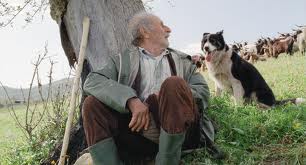
Le Quattro Volte racconta quattro vite molto diverse tra loro ma tutte in qualche modo strettamente legate: la prima è quella di un vecchio contadino che porta al pascolo tutti i giorni le sue capre. Siamo tra le alte colline della Calabria, dove il tempo sembra essersi fermato. La vita del contadino è monotona, povera, e scandita da movimenti sempre uguali. Parecchio malandato in salute, il contadino beve ogni sera una strana pozione a basa di acqua e di polvere raccolta dal pavimento della chiesa del villaggio, che tuttavia non sarà in grado di guarirlo. Dopo la sua morte, il film inizia a seguire le avventure di una capretta appena nata che fa parte del gregge del pastore. La capretta è bianca, buffa e tenerissima, e il film la segue dall’istante della nascita (in una scena molto potente nella quale esce letteralmente dal corpo della madra davanti allo spettatore), ai suoi primi passi, ai tentativi maldestri di socializzazione, fino al momento in cui si perde dietro al gregge sulle colline. Sola e disperata, la capretta si mette a dormire sotto un grande albero, un gigantesco abete che diventerà il protagonista della terza storia. Maestoso e perfetto, viene scelto dagli abitanti di un villaggio per La festa dell’Albero, quindi viene tagliato, scorticato e issato nella piazza del paese, dove tutto intorno la gente balla, mangia e beve. Una volta terminati i festeggiamenti, l’albero è fatto a pezzi e portato via da alcuni uomini. E’ l’inizio della quarta ed ultima storia: con una tecnica antichissima, i legni vengono accatastati, fatti bruciare lentamente e poi trasformati in nero carbone.


Sorprendente e spiazzante, Le Quattro Volte è la dimostrazione che il cinema ha ancora infinite cose da dire in altrettanto infiniti modi. Film privo di dialoghi (le voci sono solo un brusio di sottofondo, le parole sono indistinte, alla maniera dei film di Jacques Tati) e pàrco di essere umani (il pastore, i carbonai, gli abitanti del villaggio), Le Quattro Volte esalta l’aspetto primitivo e fondamentale della natura del cinema, quello della pura forza delle immagini. Si può restare affascinati o meno, da questo mondo, ma non si può fare a meno di entrarci, non si può davvero restarne fuori. E’ un po’ come un ritorno alle origini. I cicli della vita: quella umana, animale, vegetale e minerale, riuniti in un unico luogo, sotto lo stesso cielo, che è quello della Calabria ma potrebbe essere quello di un qualsiasi altro villaggio nel mondo, il silenzio del passaggio sulla terra di questi elementi (persino di quello umano, privato della parola, e quindi allo stesso livello degli altri), la spiritualità (una forza animista, naturale, rurale, quasi anti-religiosa) che inevitabilmente irrompe sullo schermo e fa piazza pulita di tutto il resto. Quello di Frammartino è un cinema che parla alla parte migliore degli esseri umani, quella a cui sembra rivolgersi ancora con tanta fiducia (come lo invidio!) un grande regista italiano come Ermanno Olmi. Ma in queste quattro volte io ci ho visto, soprattutto, qualcosa che mi ha ricordato da vicinissimo il cinema di Andrei Tarkovskij. Lo stesso credere alla natura come luogo della realtà e del metafisico, gli stessi ritmi lenti, ossessivi, la stessa ricerca di spiritualità, pagana o religiosa che sia. Qualcosa che ci ricorda un'evidenza troppo spesso dimenticata: l'essere umano non è il solo a vivere su questa terra, ed è probabilmente quello che che ne capisce di meno.
Alla fine della proiezione, Frammartino (quarantenne milanese di origini calabresi, alla sua seconda prova di regista dopo il film Il Dono del 2003), ha gentilmente risposto alle domande del pubblico presente in sala. Io ne avevo una ma non ho avuto il coraggio di farla. Eppure mi dispiace, perché mi ci arrovello ancora adesso. Avrei tanto voluto chiedergli: ma la capretta, che fine ha fatto la capretta??!


Grazie a Marianna, Jordi, Manù e Nandina che, nonostante una gelida, ventosa e piovosa serata parigina, non hanno fatto una piega nemmeno di fronte ad un film muto con caprette. Grandi!

domenica 5 dicembre 2010

Dove c'è Truffaut, c'è casa

Questa strada nel 17° arrondissement di Parigi non è dedicata, come molti potrebbero pensare, al regista francese François Truffaut.
Tuttavia, c'è un simpatico episodio che riguarda lui e questa via.
Un giorno Truffaut, giovanissimo, è entrato nella sede dei Cahiers du Cinéma, ha guardato i suoi amici seduti alle scrivanie e ha detto: "Buongiorno, mi chiama Truffaut, abito all'Hotel Truffaut, in Rue Truffaut!". Sono scoppiati tutti a ridere.
L'Hotel Truffaut non esiste più, ma ogni volta che passo per questa strada, che volete che vi dica, io mi sento a casa.
Related Posts Plugin for WordPress, Blogger...